From Cold Minimalism to Warm, Livable Luxury
- Project Location: Melbourne, Australia
- Core Concept / Style: Warm Minimalism, Quiet Luxury, White & Walnut Modern Interior
- Main Spaces: Open-plan kitchen, living room TV wall, entry and staircase area, study room, wardrobe, laundry and utility storage
- Material Direction: Y111 wood-grain melamine + L3110B lacquer cabinetry + marble-look countertop and backsplash
This Melbourne Quiet Luxury Home customization project reflects that shift clearly. Instead of relying on heavy decoration, the design builds value through proportion, material contrast, storage planning, and execution detail. The project combines L3110B lacquer cabinets for a clean architectural base with Y111 wood-grain melamine cabinetry to bring warmth, depth, and a natural visual rhythm into the home. In PA Home’s product coding, the L series refers to lacquer finishes, while the Y series refers to melamine finishes, known for wear resistance, scratch resistance, rich texture options, and cost-performance balance.
In high-end residential design, the strongest direction is no longer a cold, all-white minimalist space. The new language of luxury is warmer, quieter and more tactile. Across current kitchen and interior design commentary, warm minimalism, natural materials, built-in storage, stone textures, wood tones, and craftsmanship-led details continue to shape premium residential interiors.
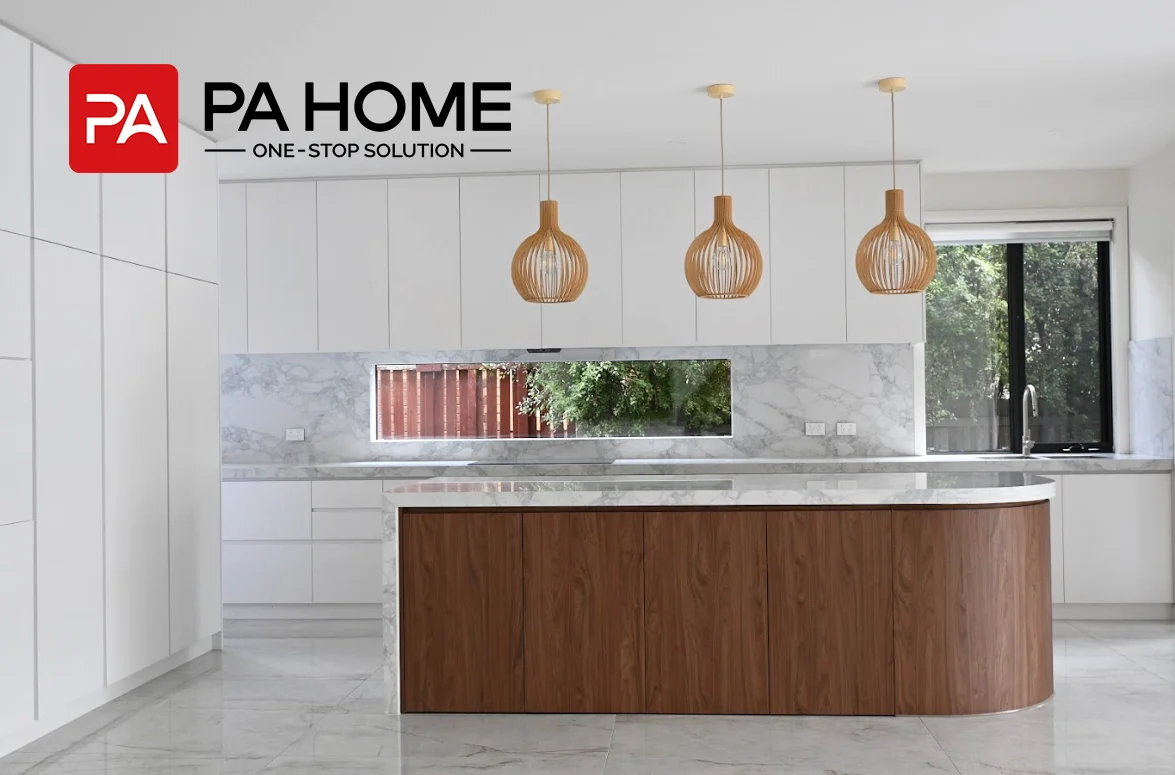
Open-Plan Kitchen: White, Walnut, and Marble-Look Surfaces
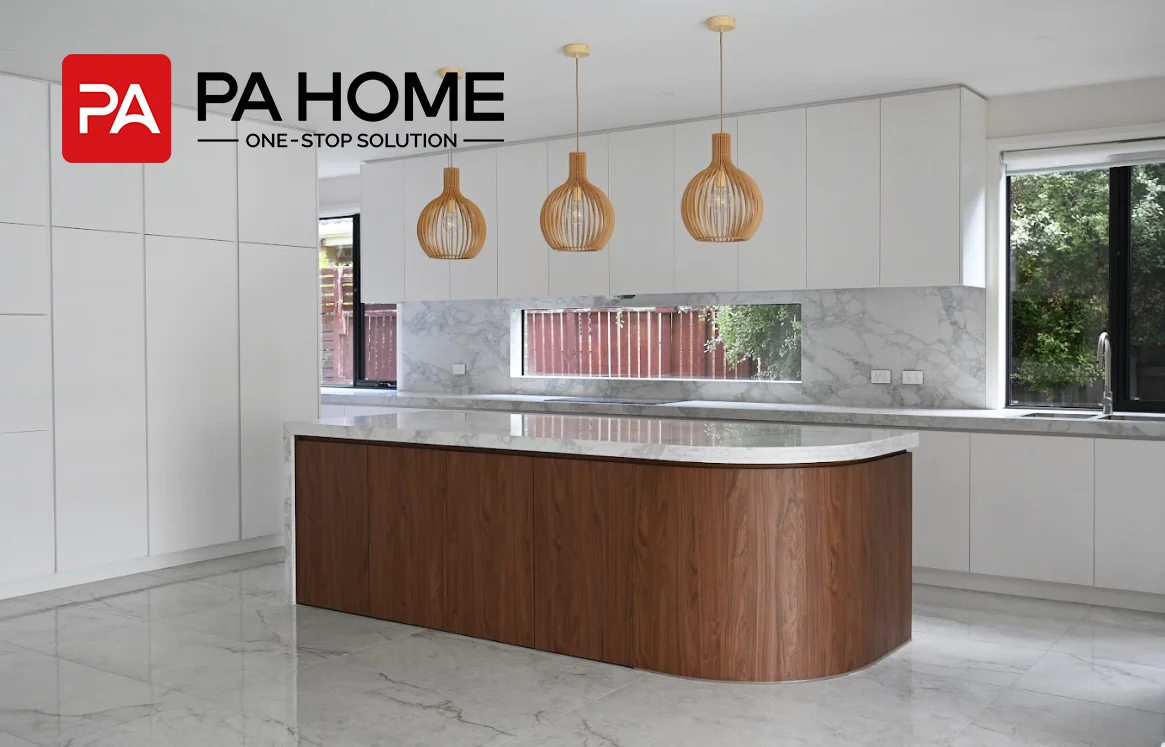
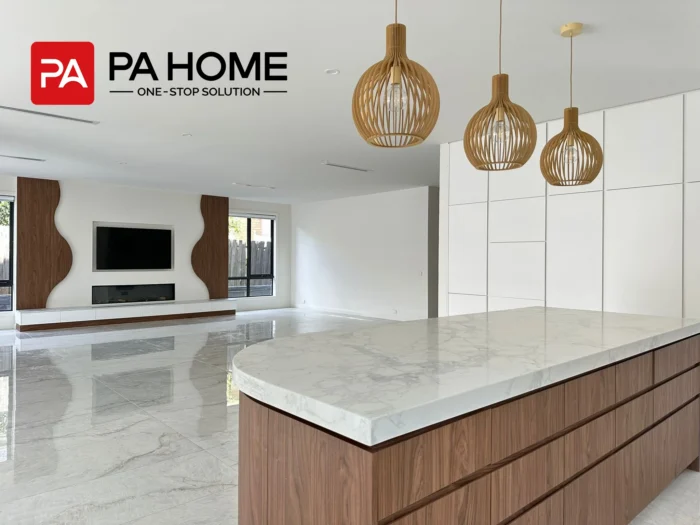
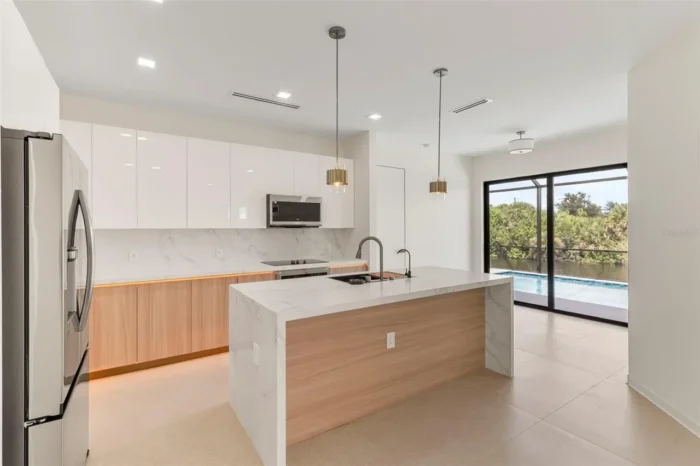
The kitchen is the visual anchor of the entire project. It uses a highly controlled palette: white lacquer cabinetry, walnut-toned island cabinetry, marble-look countertop and backsplash, and warm pendant lighting. The result is clean but not sterile, refined but still comfortable.
The full-height white cabinets on the left provide a calm, integrated storage wall. Their flat panels help the kitchen blend into the architecture rather than appear as a separate furniture system. On the island, the Y111 wood-grain finish introduces a warmer residential character, balancing the cool stone texture of the countertop.
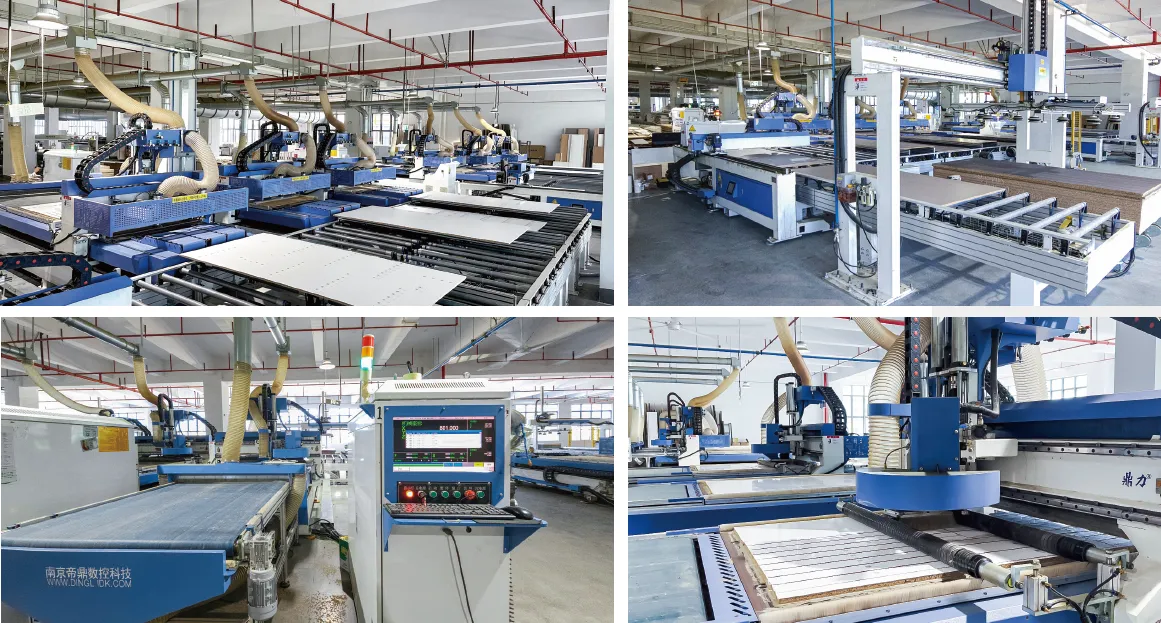
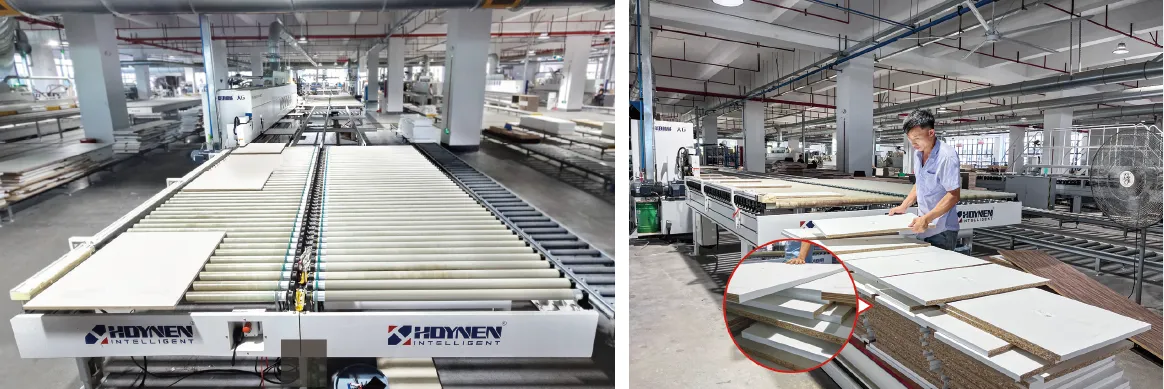
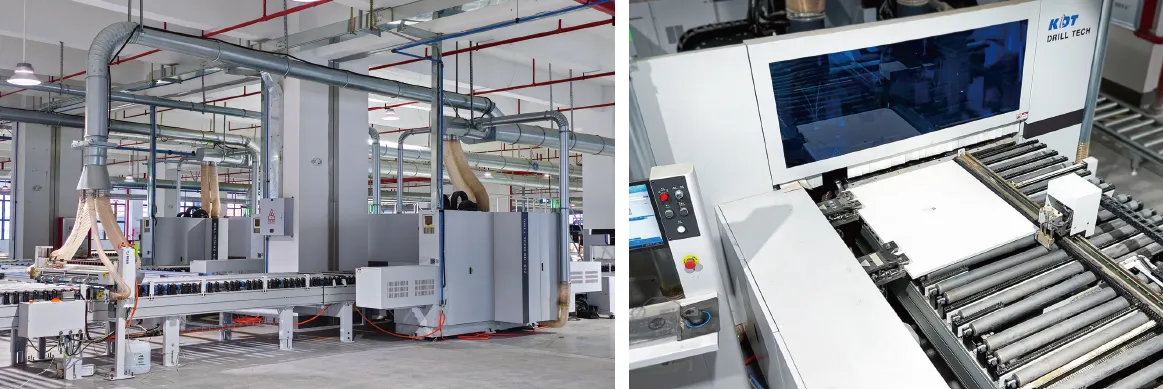
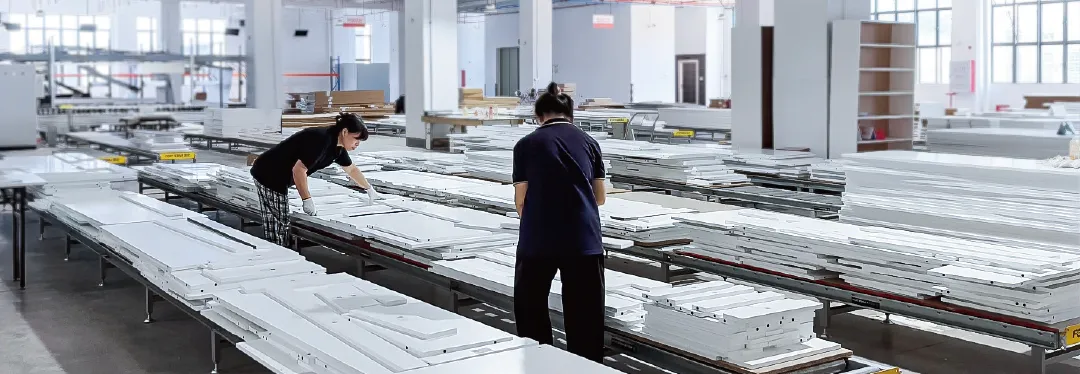
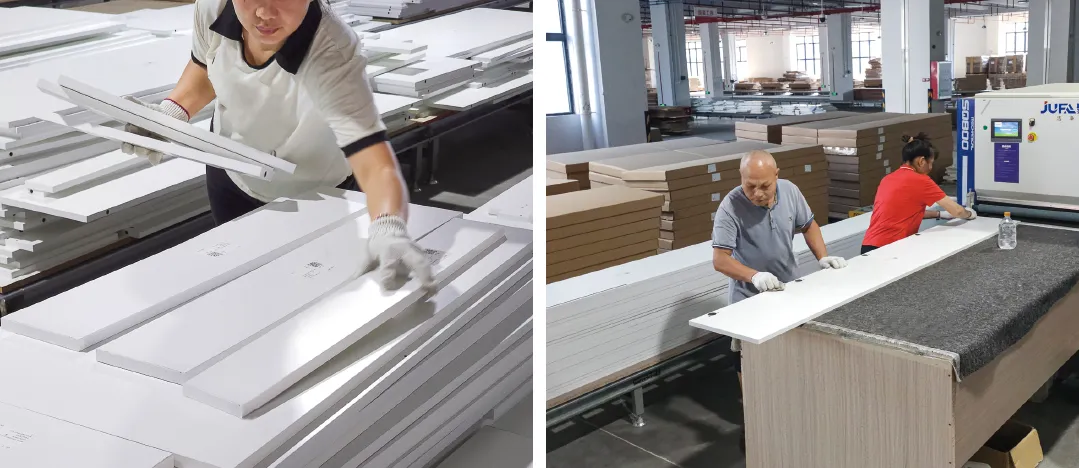
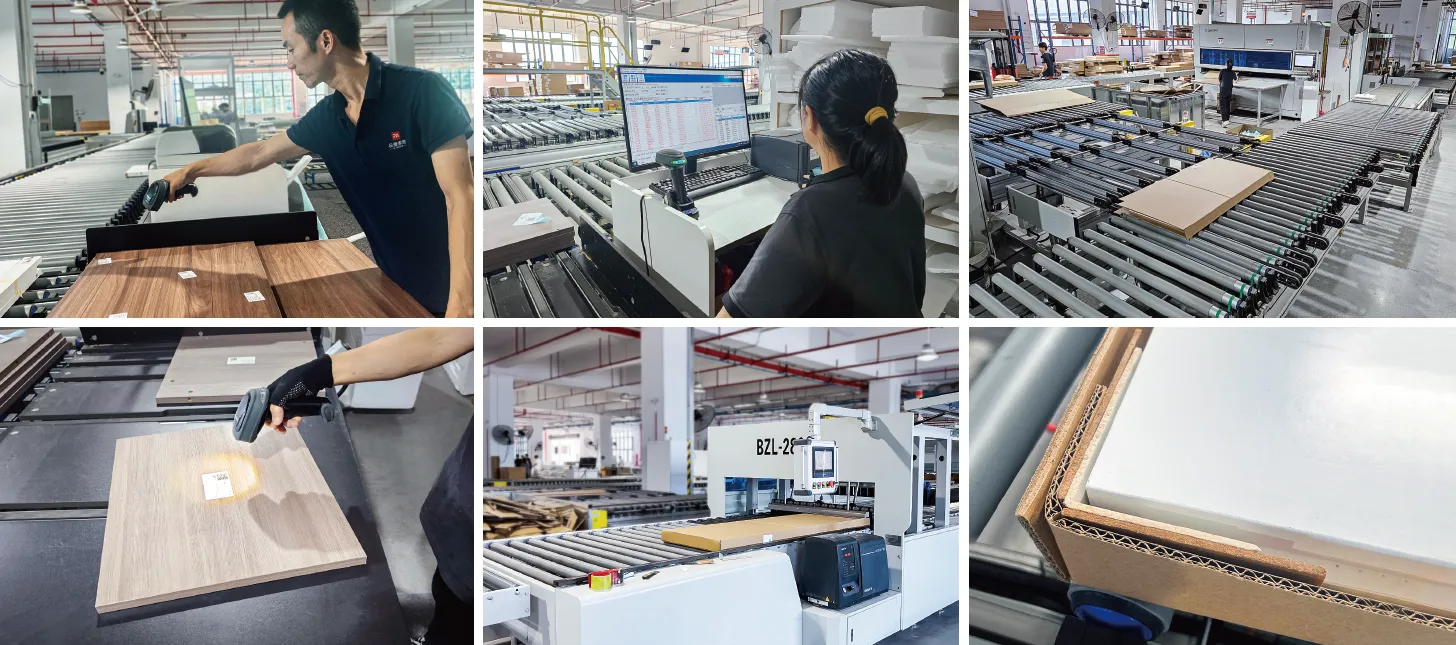
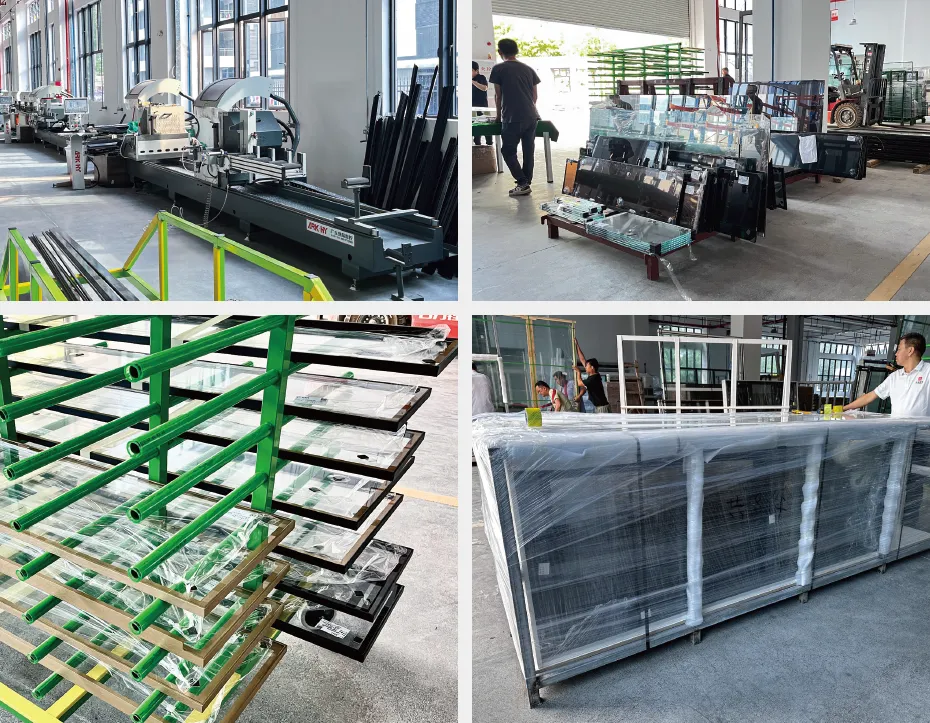
From an engineering perspective, this type of kitchen requires strict control of panel alignment, countertop edge detailing, cabinet height consistency, and shadow gaps. The handleless drawer system also depends on accurate production and installation tolerances. PA Home’s IDPI intelligent design and production integration system supports digital coordination from design to delivery, while CNC production helps improve accuracy and consistency across repeated cabinet parts.
Curved Kitchen Island: A Softer Form for Modern Luxury
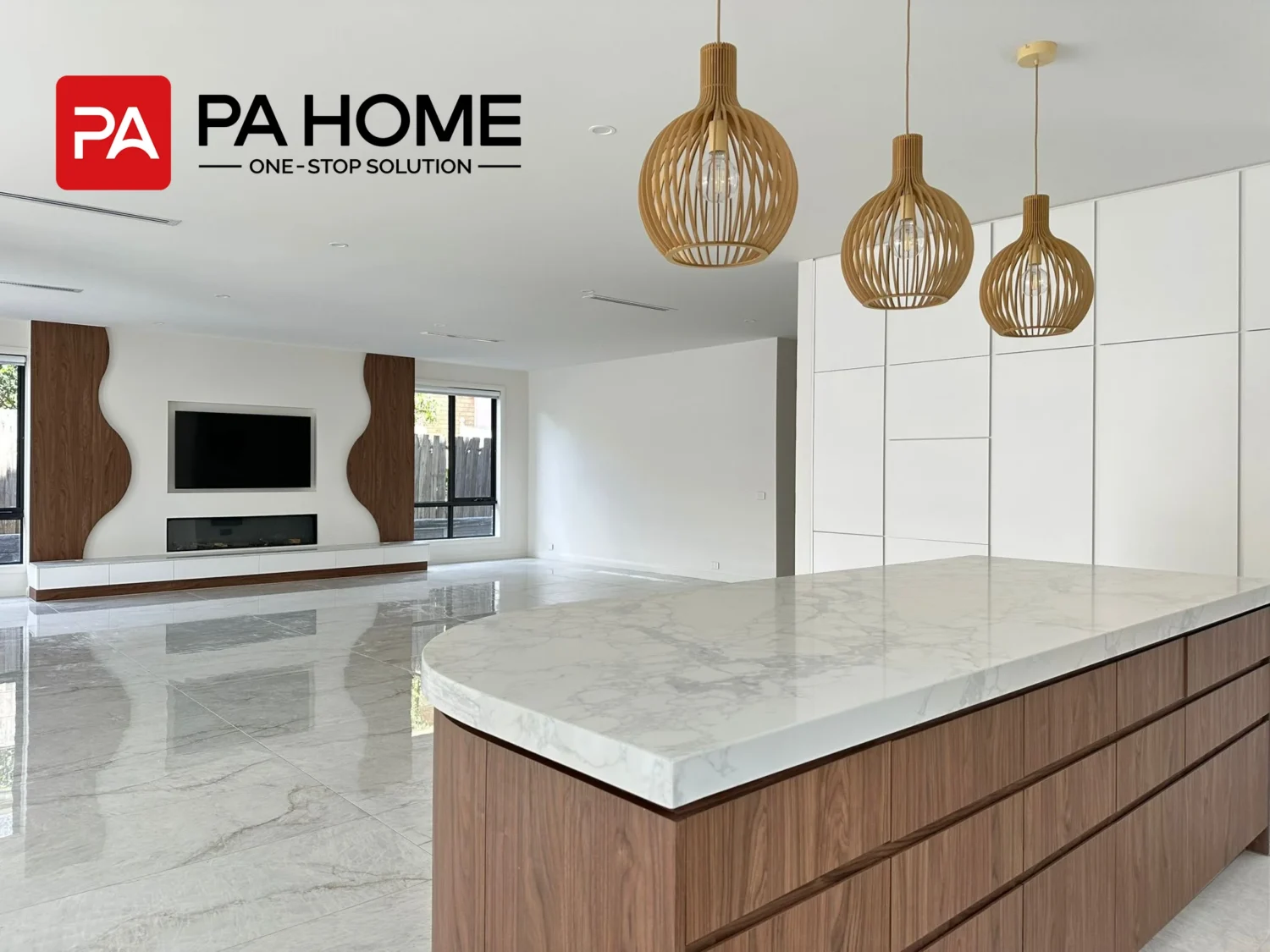
One of the strongest design highlights is the curved walnut island. Curved cabinetry is increasingly used in premium interiors because it breaks the rigidity of straight-line minimalism and gives the room a more human, welcoming flow.
In this Melbourne kitchen, the rounded island corner improves circulation, especially where the island connects with the living and dining area. It also adds a furniture-like quality, making the kitchen feel less like a purely functional workspace and more like a central social zone.
Behind this soft visual effect is a much more technical manufacturing process. Compared with standard box cabinet construction, curved cabinetry requires strict control of the radius, base support, panel bending, surface wrapping, countertop overhang, and vertical wood-grain direction. PA Home applies MDF ARC CRAFT technology to form stable curved cabinet structures with smooth arc transitions, helping the walnut finish wrap naturally around the island body while maintaining dimensional accuracy and surface consistency.
For B2B residential projects, this is where factory capability matters. A curved island may look simple in photos, but it depends on precise production drawings, stable MDF substrate processing, accurate arc shaping, material bonding, edge finishing, and careful installation sequencing. This allows the curved walnut island to achieve both a refined luxury appearance and reliable long-term performance in daily use.
Secondary Kitchen and Utility Planning: Function Hidden Behind Minimalism
Beyond the show kitchen, the project includes a more compact U-shaped kitchen area and utility cabinetry. This reflects a practical trend in high-end homes: the main kitchen must look beautiful in an open-plan setting, while secondary work zones must support everyday cooking, cleaning, laundry, and storage.
The U-shaped kitchen uses white cabinetry, a marble-look backsplash, integrated appliances, and long horizontal drawers. The design is simple, but the storage is highly functional. Large drawers improve access to cookware, while full-height units keep appliances and pantry storage visually contained.
The laundry area continues the same material logic: white upper cabinets for a clean wall elevation, walnut lower drawers for warmth, and a marble-look countertop for visual continuity. A hanging rail adds daily practicality without disturbing the minimalist cabinet composition.
This is where whole-house customization becomes valuable. Instead of treating the laundry or utility room as an afterthought, PA Home keeps the same design DNA across secondary spaces. For builders and designers, this improves the perceived quality of the entire home, not just the most visible rooms.
Living Room TV Wall: Architectural Storage with Curved Walnut Panels
The living room carries the same quiet luxury language but applies it in a more architectural way. The TV wall uses a white central panel, walnut side panels with flowing curved edges, a long low storage unit, and a linear fireplace.
This wall demonstrates how custom cabinetry can become part of the interior architecture. The curved walnut panels echo the kitchen island’s soft radius, creating continuity across the open-plan layout. The low cabinet provides practical storage while keeping the living area visually light.
For high-end residential projects, a TV wall is often one of the most photographed and most emotionally important spaces. It needs to integrate media equipment, cable planning, fireplace safety, storage access, and wall panel finishing. When these details are coordinated at the factory drawing stage, the final installation can look clean and intentional rather than assembled on site.
Entry, Staircase, and Transition Spaces: Making Circulation Areas Valuable
A strong whole-house project does not only focus on kitchens and living rooms. Transition spaces also affect the perceived quality of the residence. In this project, the staircase area, entry view, and hallway ceiling feature use walnut tones to connect different zones.
The staircase itself already provides a strong visual curve. PA Home’s cabinetry and shelving system responds to that movement with simple open shelves, clean white walls, and warm wood surfaces. This creates a calm arrival experience without overloading the space.
The wavy walnut ceiling element is especially important. It turns a circulation area into a design feature and repeats the project’s key visual idea: straight architectural lines softened by curved wood forms. For project execution, these details require accurate templating, edge finishing, secure fixing, and careful coordination with lighting and ceiling services.
Study, Wardrobe, and Storage Systems: A Whole-House Cabinetry Language
The study room uses a full-wall walnut cabinetry system with open display shelves, closed storage, drawer units, and a long workstation. It shifts the same warm minimalist palette into a more focused working environment.
For modern homes, the study is no longer a small optional room. It needs to support hybrid work, reading, display, and storage. This cabinet system makes the wall highly functional while keeping the room visually unified.
The wardrobe and tall storage areas continue the same discipline. Flat white panels are used where the design needs to disappear into the wall, while walnut shelves and panels provide warmth where the user interacts with the space more directly.
Why PA Home for Melbourne Whole-House Customization Projects
1. System Coordination: One Design Language Across the Whole Home
This Melbourne project is not a single kitchen cabinet order. It combines an open-plan kitchen, curved island, TV wall, study cabinetry, wardrobe, laundry, utility cabinetry, staircase transition, and ceiling feature into one consistent white-and-walnut interior language. For this kind of project, the real challenge is not only making cabinets, but keeping the same material tone, panel proportion, storage logic, and installation detail across different rooms.
2. Manufacturing Accuracy: Turning Curved and Handleless Details into Buildable Products
The most valuable details in this project are also the hardest to execute: the curved walnut island, the handleless drawer lines, the long white cabinet elevations, the curved walnut TV wall panels, and the wavy ceiling feature. These elements look minimal, but they leave very little room for error. A small mismatch in panel alignment, radius control, edge finishing, or drawer spacing would immediately affect the final visual quality.
3. Project Delivery Capacity: Design Flexibility Backed by Scale
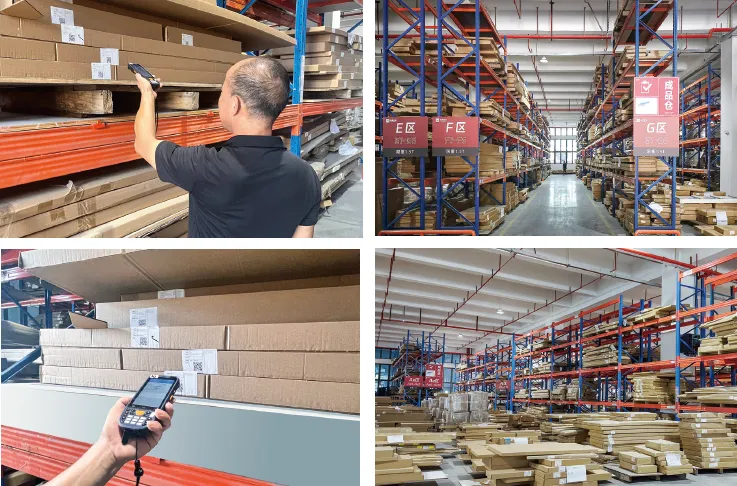
For architects, developers, and builders, a beautiful sample is not enough. A supplier also needs stable delivery, export experience, project coordination, and the ability to support different room packages within the same schedule. This matters especially in whole-house customization, where delays or inconsistencies in one area can affect the handover of the entire residence.
Planning a luxury project in Australia? Contact Us For Any Support Now