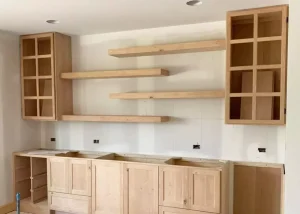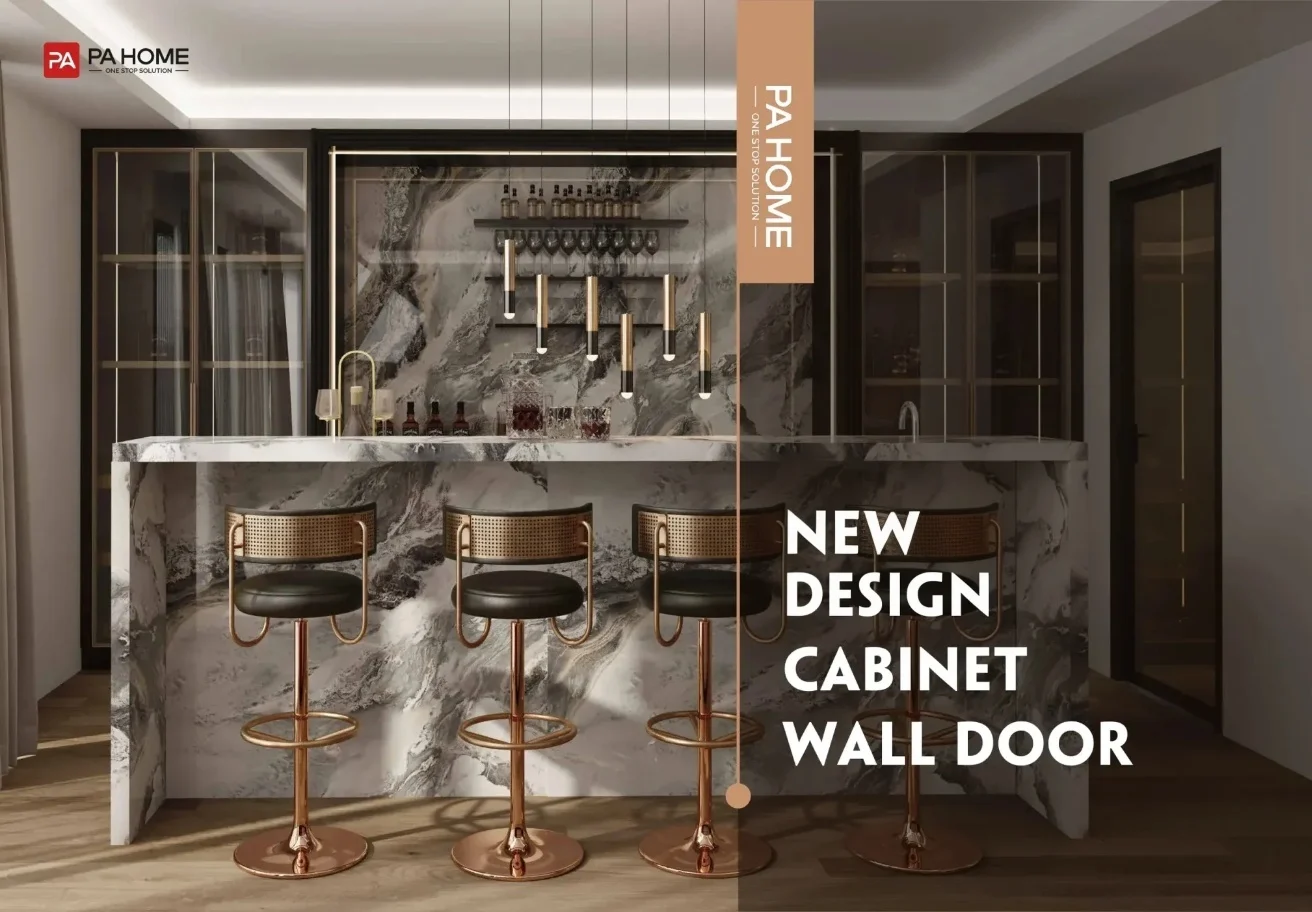
Choosing the right cabinet finish is an important decision for apartment developers, designers, and contractors. The cabinet surface affects more than appearance. It also influences durability, maintenance, cost, and the overall positioning of a residential project.
Among modern cabinet options, PET, melamine, and wood veneer are three popular choices. Each material has different advantages and is suitable for different project requirements.
This guide compares PET vs melamine vs wood veneer cabinets and explains how developers can choose the right finish for apartment and residential projects.
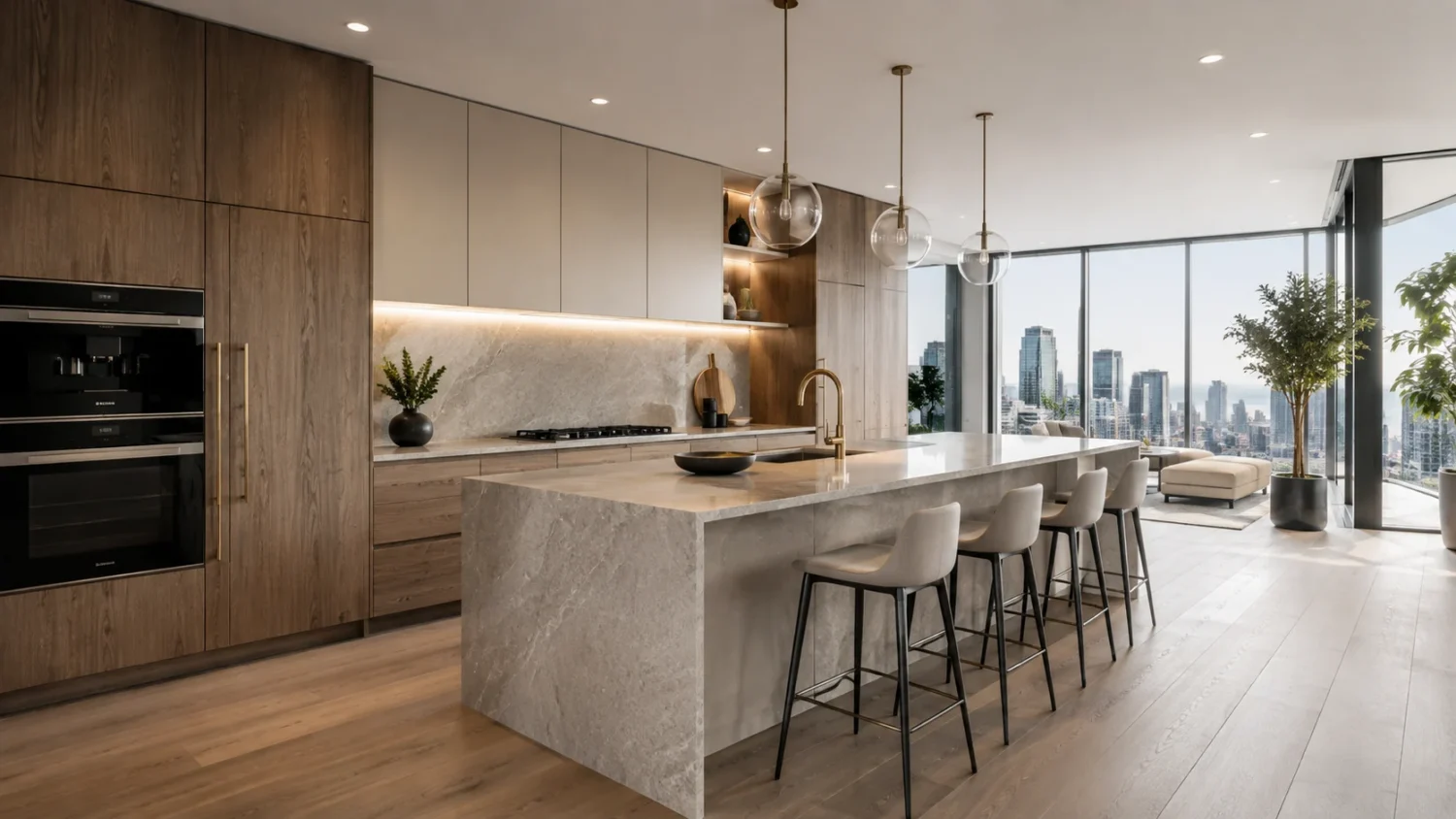
Understanding PET, Melamine, and Wood Veneer Cabinet Finishes
Before comparing these finishes, it is important to understand their basic characteristics.
PET Cabinets
PET (Polyethylene Terephthalate) is a modern cabinet surface material known for its smooth texture and contemporary appearance.
PET finishes are widely used in modern kitchens because they provide:
- Matte and elegant surfaces
- Excellent color consistency
- Easy cleaning
- Modern design appeal
Many designers choose PET cabinets for apartments with minimalist, Scandinavian, or luxury contemporary styles.
The smooth surface also creates a premium visual experience, making PET a popular choice for projects targeting higher-end residential markets.
Melamine Cabinets
Melamine is one of the most commonly used cabinet finishes for residential and commercial projects.
It consists of decorative paper bonded with resin and applied to an engineered wood panel.
Main advantages include:
- Cost efficiency
- Good durability
- Wide range of colors and textures
- Easy maintenance
Because of its balance between price and performance, melamine cabinets are often selected for:
- Rental apartments
- Multifamily housing
- Large-scale residential developments
For projects where budget control is important, melamine provides a practical solution without sacrificing functionality.
Wood Veneer Cabinets
Wood veneer uses a thin layer of natural wood applied to an engineered panel.
Unlike printed finishes, veneer provides real wood grain and natural texture.
Its advantages include:
- Premium appearance
- Unique wood patterns
- Warm and natural feeling
- Luxury positioning
Wood veneer is often used in:
- High-end apartments
- Luxury residences
- Boutique hospitality projects
It creates a more exclusive atmosphere compared with standard finishes.
PET vs Melamine vs Wood Veneer: Key Differences

Each finish has different strengths. The best choice depends on project goals.
| Feature | PET Cabinets | Melamine Cabinets | Wood Veneer Cabinets |
|---|---|---|---|
| Appearance | Modern matte finish with a smooth and premium look | Flexible designs with various colors, textures, and patterns | Natural wood grain with a luxury and warm appearance |
| Cost | Medium to High | Low to Medium | High |
| Durability | Excellent surface performance for modern residential projects | Good durability for high-volume apartment applications | Good durability with proper maintenance |
| Maintenance | Easy to clean and maintain | Easy maintenance and practical for daily use | Requires more care to protect the natural wood surface |
| Design Style | Modern, minimalist, Scandinavian, contemporary | Flexible styles for various residential projects | Luxury, natural, premium interior designs |
| Best Applications | Premium apartments, modern residential developments | Rental apartments, multifamily housing, large-scale projects | Luxury residences, villas, boutique hospitality projects |
Appearance
If the goal is a modern and sophisticated kitchen design, PET is often preferred.
Its smooth matte finish creates a clean and seamless look.
Melamine offers more flexibility with colors and patterns, including wood grain designs, stone textures, and solid colors.
Wood veneer provides the most natural appearance because every panel has unique wood characteristics.
Cost
Budget is one of the biggest factors in apartment projects.
Melamine is usually the most cost-effective option because it supports efficient large-volume production.
PET requires additional surface processing, which increases the cost but provides a more premium appearance.
Wood veneer has a higher price due to the use of natural wood materials and additional craftsmanship.
For developers, the right choice depends on the project’s market position and expected return.
Durability and Maintenance
Apartment projects require finishes that can handle daily use.
Melamine performs well in high-volume applications because it is durable and easy to maintain.
PET offers excellent surface performance and is suitable for modern apartments where appearance is a priority.
Wood veneer creates a luxury experience but may require more attention to moisture control and maintenance.
Which Cabinet Finish Is Best for Different Projects?

There is no single “best” cabinet finish. The right choice depends on the type of project.
Rental Apartments
For rental housing, developers usually prioritize:
- Cost control
- Durability
- Easy replacement
- Low maintenance
Melamine cabinets are often a practical choice because they provide reliable performance at a competitive price.
Modern Apartment Developments
For mid-to-high-end apartments, PET cabinets are becoming increasingly popular.
They offer:
- Premium appearance
- Modern styling
- Easy cleaning
- Strong market appeal
PET finishes work especially well with minimalist designs and neutral color palettes.
Luxury Residential Projects
For luxury apartments and premium residences, wood veneer can create a stronger emotional connection.
Natural wood textures help create:
- Warm interiors
- High-end atmosphere
- Unique design identity
Cost and Budget Considerations
When choosing cabinet finishes, developers should look beyond the initial material price.
The total project cost may include:
- Cabinet materials
- Door finishes
- Hardware systems
- Production requirements
- Packaging
- Shipping
- Maintenance costs
For example, a lower-cost finish may reduce initial investment, but a premium finish may increase the perceived value of the property.
A smart approach is to match cabinet finishes with the target market.
For large apartment projects, many developers use a combination strategy:
- Standard units with melamine finishes
- Premium units with PET or veneer upgrades
This allows better budget control while creating different product levels.
How to Choose the Right Cabinet Finish Supplier
Selecting the right material is only one part of a successful cabinet project. Choosing an experienced supplier is equally important.
A professional cabinet manufacturer should provide:
- Material samples before production
- Clear technical specifications
- Quality inspection procedures
- Consistent production standards
- Support for large-scale projects
For apartment developments, suppliers should also understand:
- Project timelines
- Bulk production requirements
- International shipping
- Installation coordination
Working with an experienced supplier helps developers avoid problems such as inconsistent finishes, production delays, and quality issues.
Conclusion
PET, melamine, and wood veneer cabinets each offer unique advantages.
- Melamine is ideal for cost-efficient apartment projects.
- PET is suitable for modern residential developments that require a premium look.
- Wood veneer is best for luxury projects seeking natural materials and distinctive design.
The right cabinet finish depends on your project goals, budget, and target market.
For developers planning apartment, residential, or hospitality projects, PA Kitchen provides customized cabinet solutions with professional material selection, manufacturing support, and global project experience.
Need help choosing the right cabinet finish for your project? Contact PA Kitchen and let our team recommend a solution based on your design goals and budget requirements.
FAQs
1. Which cabinet finish is best for apartment projects: PET, melamine, or wood veneer?
The best cabinet finish depends on the project type, budget, and design goals.
Melamine is a practical choice for large-scale apartment projects because it offers good durability and cost efficiency. PET is suitable for modern apartments that require a premium matte appearance and easy maintenance. Wood veneer is often selected for luxury residences where natural texture and high-end design are priorities.
There is no single best finish for every project. Developers should choose based on the expected market position and long-term performance requirements.
2. Is PET more durable than melamine for kitchen cabinets?
PET and melamine both provide good durability, but they are designed for different needs.
PET finishes offer a smooth, premium surface with excellent resistance to daily stains and are easy to clean. Melamine is widely used in multifamily projects because it provides reliable performance, cost control, and a wide range of design options.
For high-volume apartment developments, melamine is often preferred for efficiency, while PET is commonly chosen for projects where modern appearance is a priority.
3. Are wood veneer cabinets a good choice for apartment developments?
Wood veneer cabinets can be an excellent choice for premium apartment developments, luxury residences, and hospitality projects.
Unlike printed finishes, wood veneer uses real wood surfaces, creating unique grain patterns and a natural appearance. However, it usually requires a higher budget and more careful maintenance compared with PET or melamine.
For developers targeting upscale markets, wood veneer can help create a stronger sense of quality and design value.
4. How should developers choose the right cabinet finish for a large-scale project?
Developers should consider several factors before selecting a cabinet finish, including:
- Project budget
- Target customers
- Interior design style
- Maintenance requirements
- Production efficiency
- Material availability
For example, rental apartments may benefit from durable and cost-effective melamine finishes, while premium residential projects may use PET or wood veneer to enhance the overall interior experience.
Working with an experienced cabinet manufacturer can help developers compare materials and select the most suitable finish for their project.