Choosing the right bathroom sink cabinet shouldn’t feel overwhelming. Yet many homeowners struggle with the same issues: poor moisture resistance, wrong sizes, limited storage, or cabinets that simply don’t last. If this sounds familiar, you’re not alone. A well-designed sink cabinet transforms your bathroom’s function and style, but only if you know what to look for.
This guide breaks everything down in a clear, practical, and user-friendly way. You’ll discover cabinet types, the best materials, sizing rules, installation tips, and real-world buying advice backed by research. My goal is to help you avoid common mistakes and pick a bathroom sink cabinet that works for your space—and lasts for years.
What Is a Bathroom Sink Cabinet?
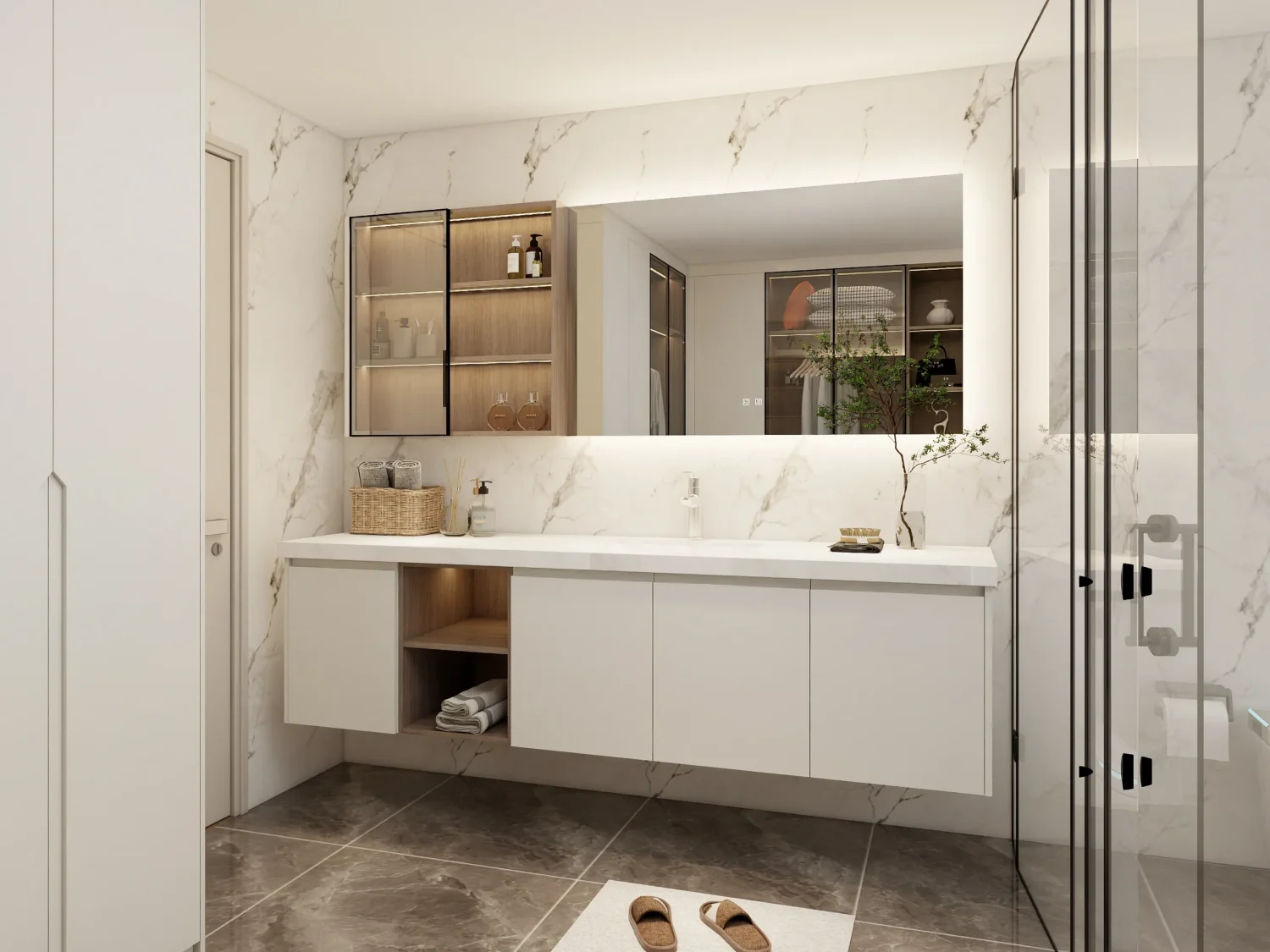
A bathroom sink cabinet—often called a bathroom vanity—is a storage unit built around your sink. It hides plumbing, provides countertop support, and organizes essentials like toiletries and cleaning products. While many people use “vanity” and “sink cabinet” interchangeably, they’re not always the same. A vanity usually includes a countertop and sink, while a sink cabinet can be sold alone.
Most buying mistakes happen because homeowners overlook three things:
Moisture levels
Plumbing layout
Space constraints
A good bathroom sink cabinet adapts to all of these. That’s why understanding the basic structure matters before you decide on styles or colors.
Popular Types of Bathroom Sink Cabinets
Different bathrooms need different cabinet styles. Below are the most common types and where each works best.
Freestanding Bathroom Sink Cabinet
Freestanding sink cabinets are the most classic option. They rest directly on the floor and usually offer the most storage. They’re also the easiest to install because they don’t require wall reinforcement.
Best For
Standard homes and apartments
Bathrooms where plumbing cannot be moved
Anyone who wants maximum storage
Landlords or rental units needing simple installation
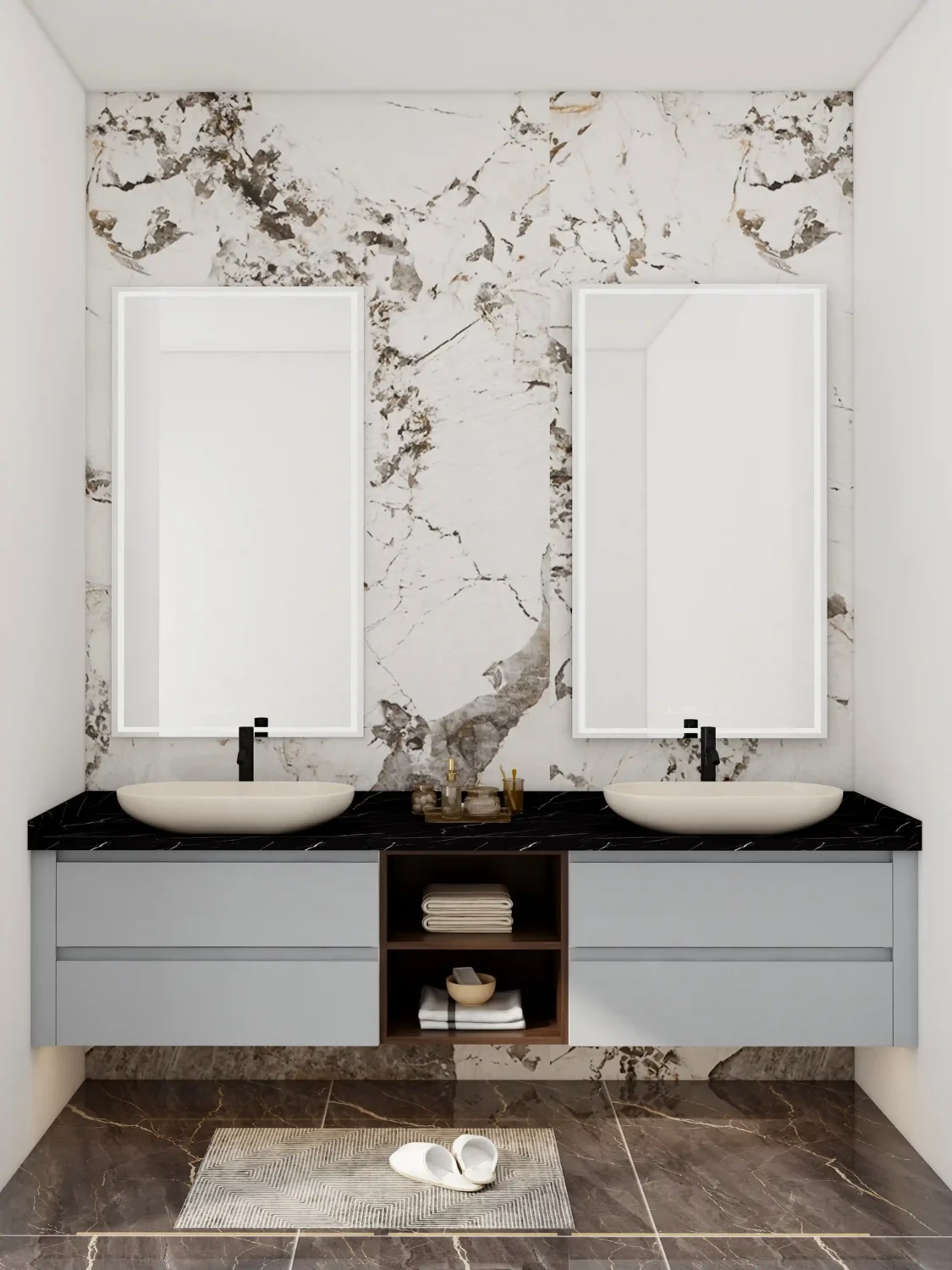
Floating Bathroom Sink Cabinet (Wall-Mounted)
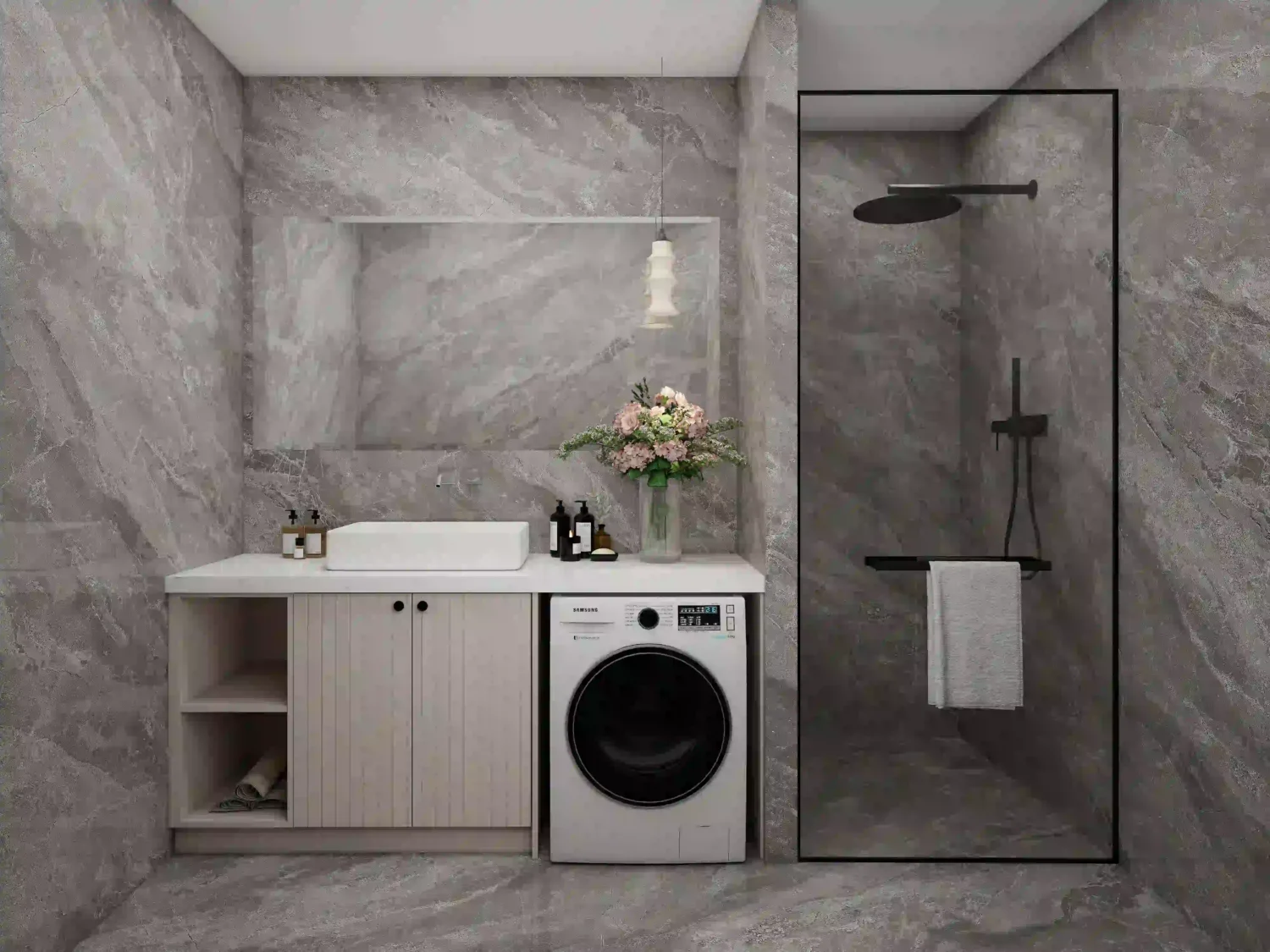
Floating bathroom sink cabinets create a clean, modern look. Because they don’t touch the floor, they make the room feel bigger and allow easy cleaning underneath.
Best For
Small bathrooms needing visual space
Modern and minimalist interiors
Homes wanting a “hotel-style” look
Bathrooms with good wall structure for mounting
Small Bathroom Sink Cabinet (Slim-Depth)
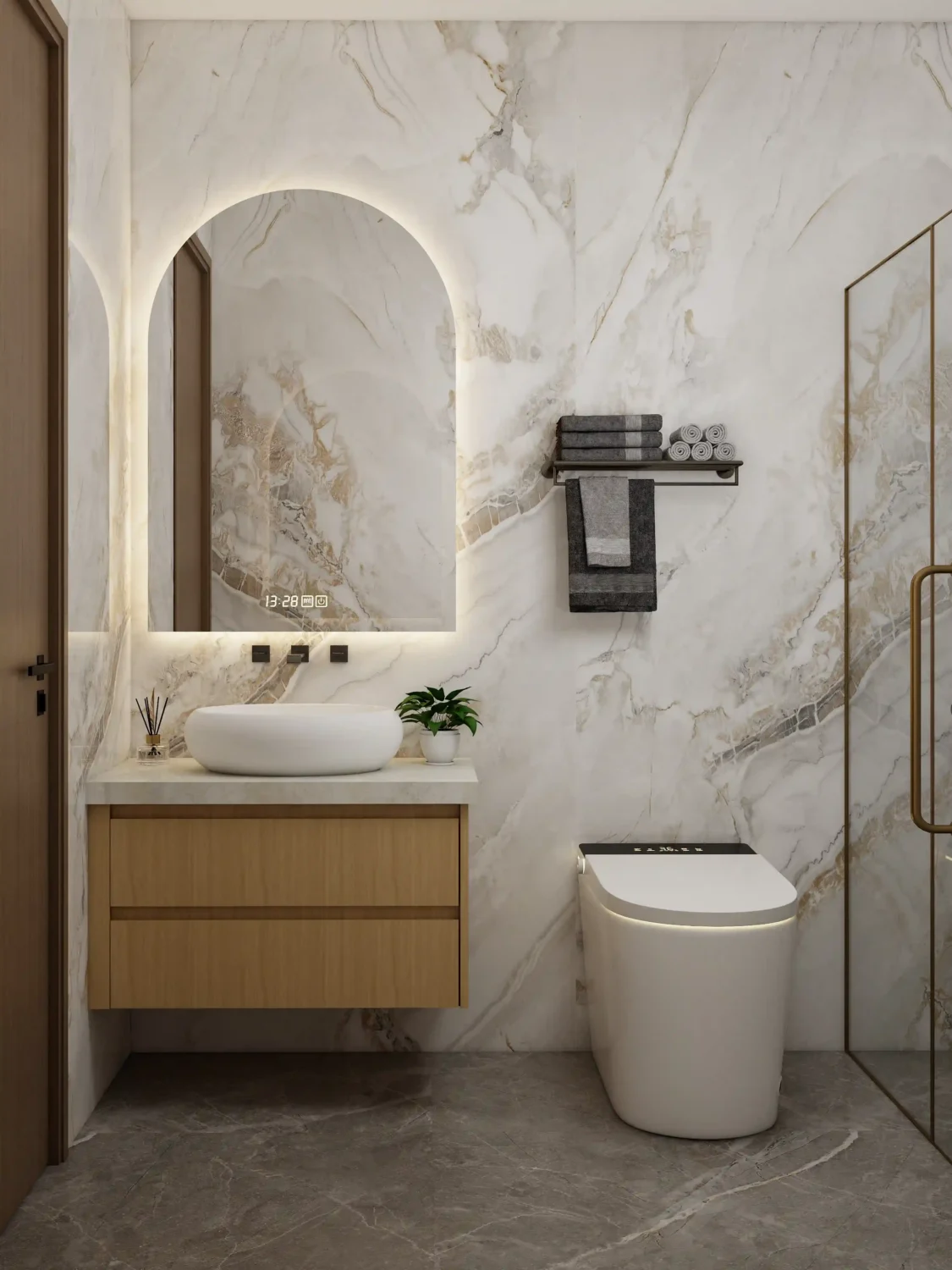
Slim-depth cabinets minimize how far the cabinet projects into the room. They keep the bathroom feeling open while still offering essential storage.
Best For
Narrow bathrooms
Studio apartments and small condos
Guest bathrooms with limited space
Older homes with tight door clearances
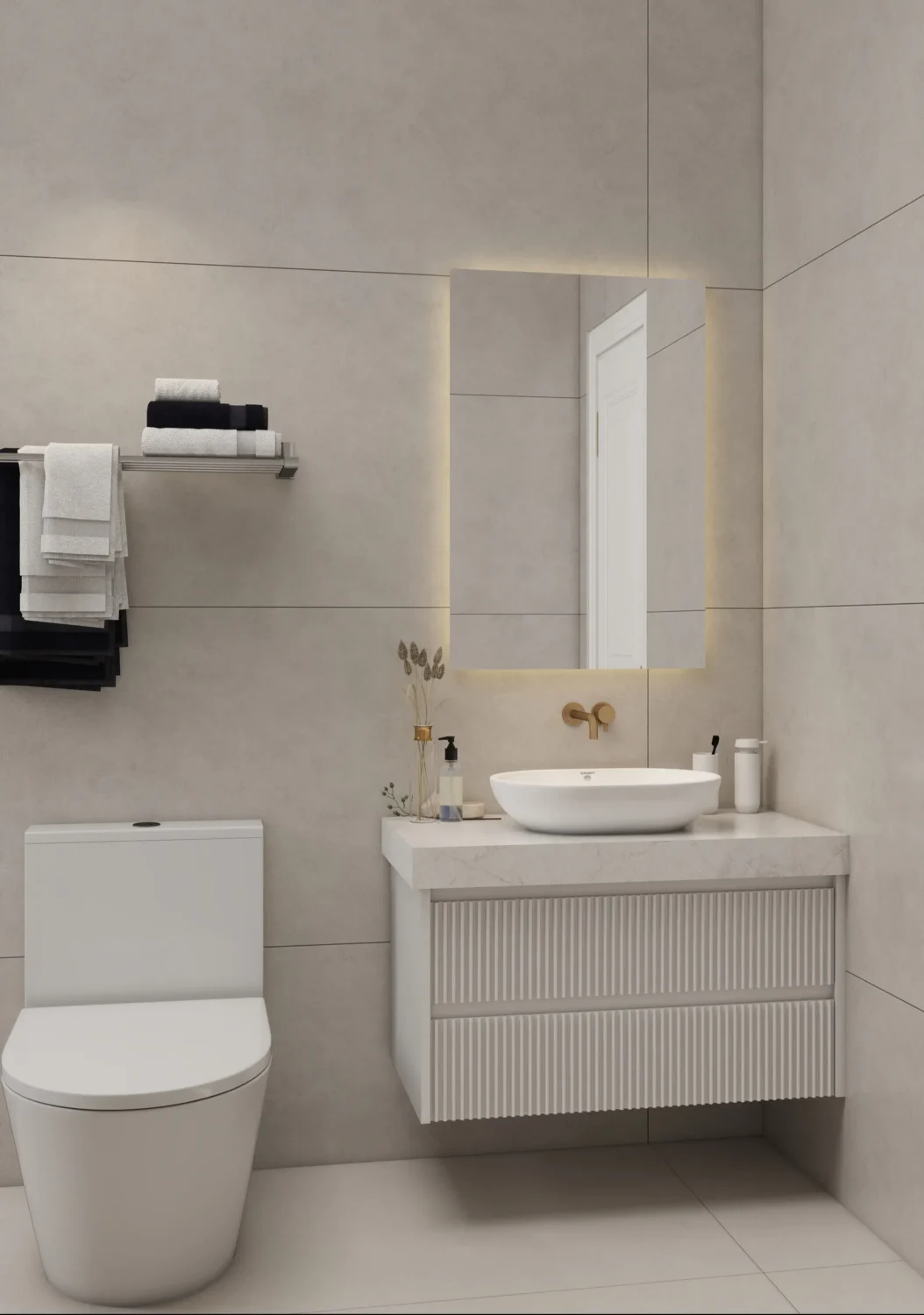
Corner Bathroom Sink Cabinet
A corner sink cabinet is designed to fit unused corner spaces, making it ideal for small or awkward bathroom layouts.
Best For
Bathrooms under 35 sq ft
Powder rooms
Odd-shaped layouts
Spaces where the plumbing is already close to a corner
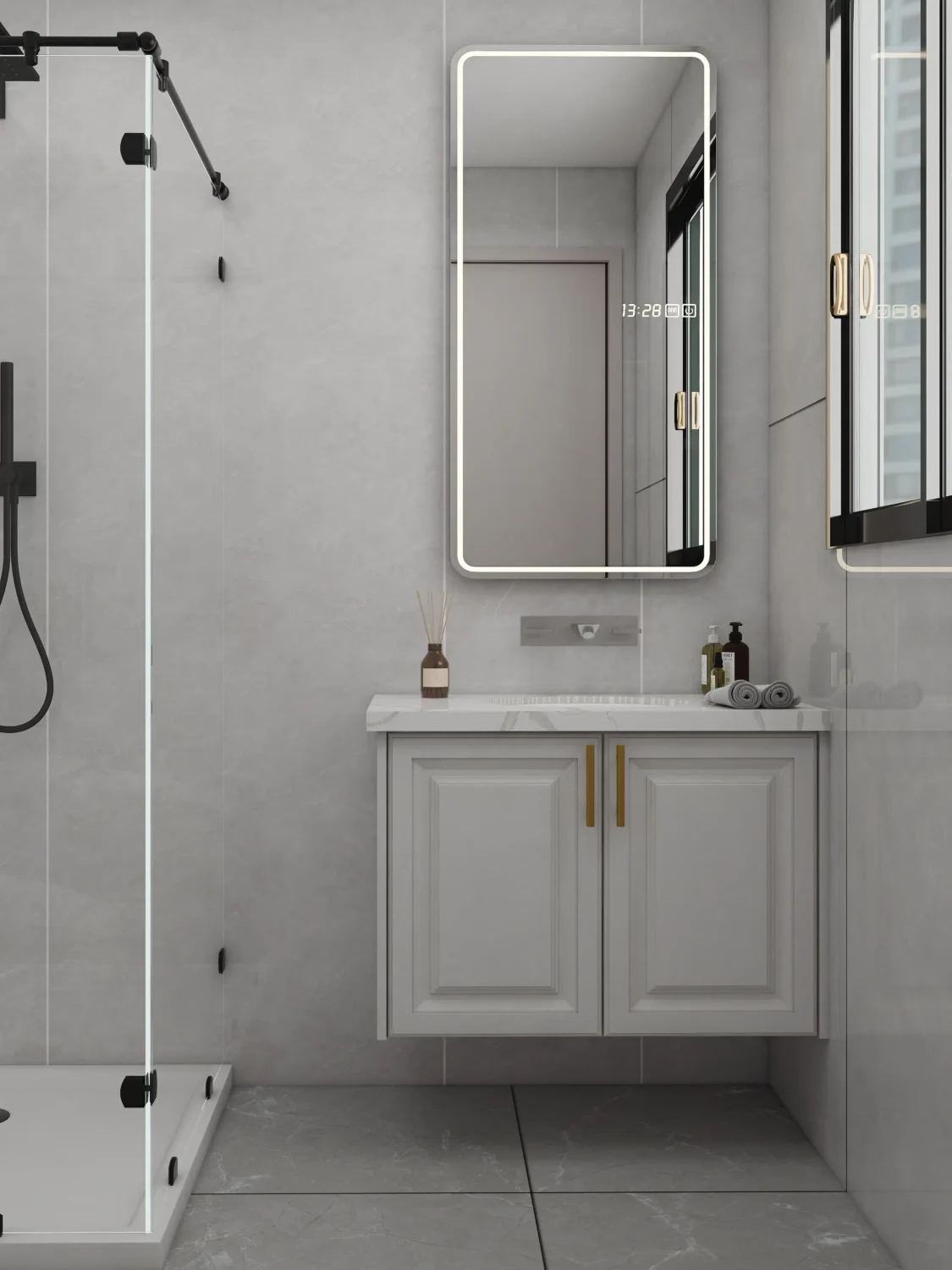
Open-Shelf Bathroom Sink Cabinet
Open-shelf cabinets offer an airy, accessible storage style. They are popular in modern homes and Airbnb units because towels and baskets are easy to grab.
Best For
Guest bathrooms
Airbnb units or hotels
Minimalists who like open storage
Spaces needing quick-access towel storage
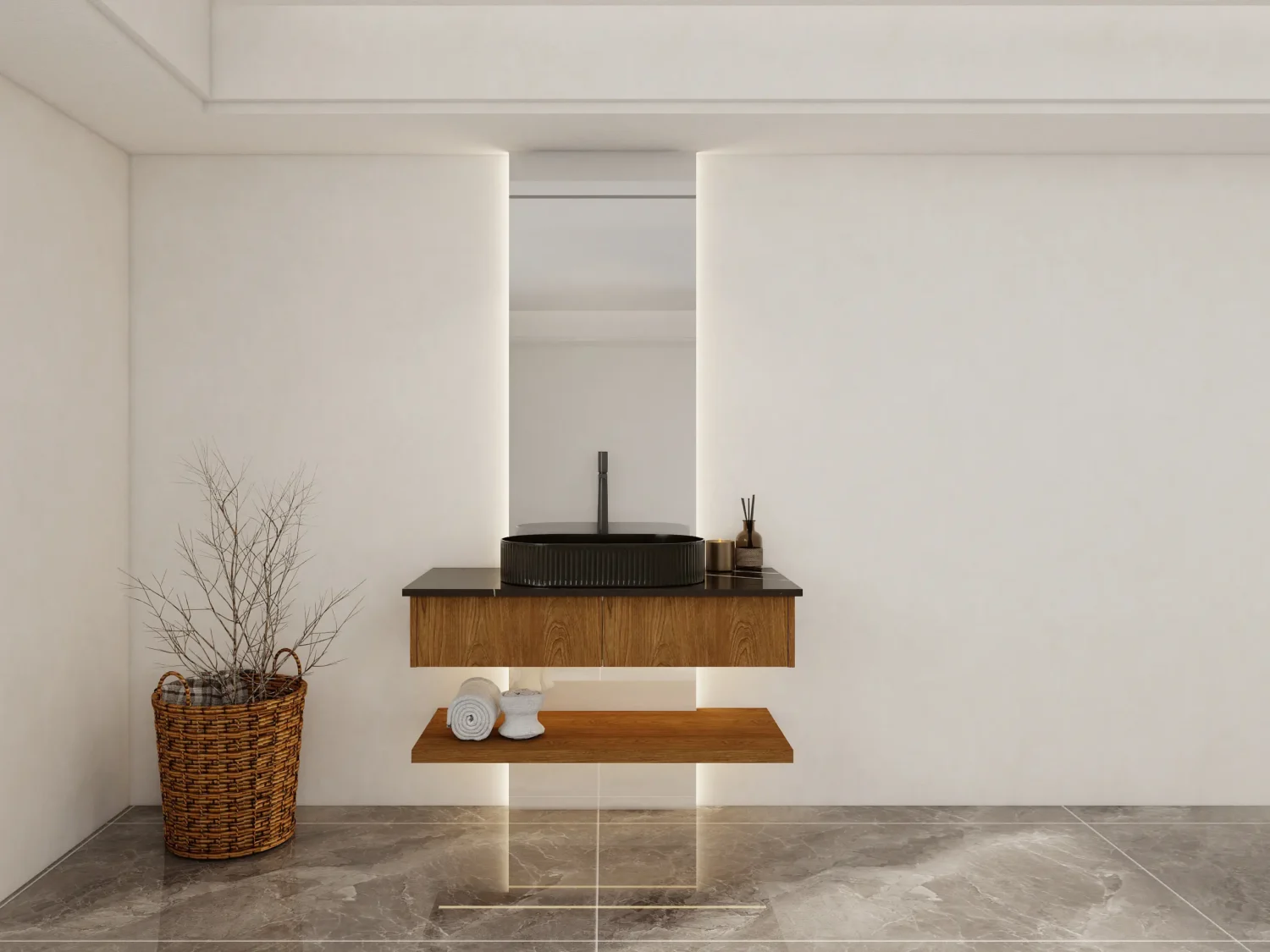
Vessel Sink Cabinet (For Bowl Sinks)
A vessel sink cabinet is built to support a bowl-style sink placed on top of the countertop. This design creates a high-end, spa-like feeling.
Best For
Luxury bathrooms
Master bathrooms
Spa-inspired homes
Homeowners who want a bold design statement
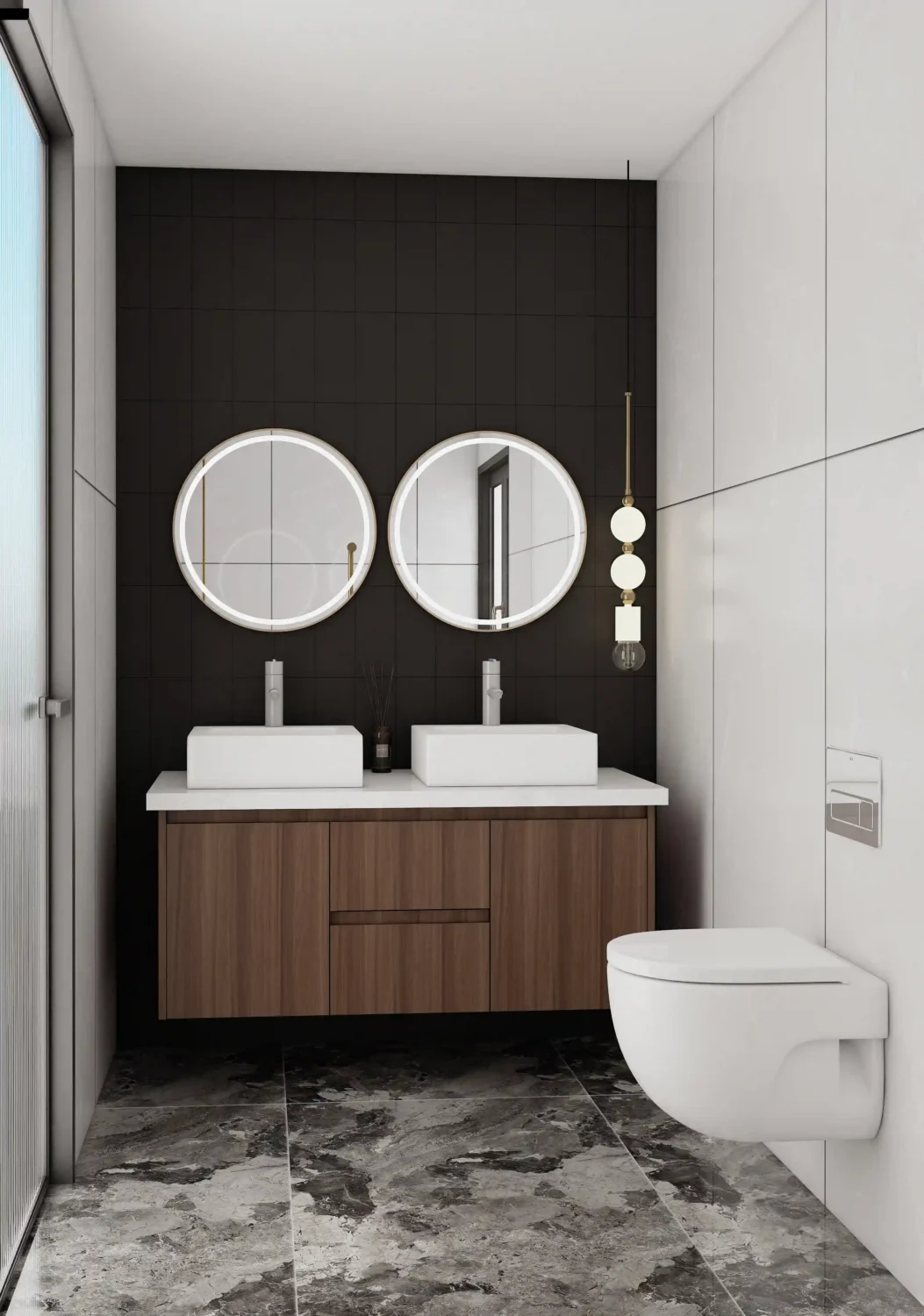
Double-Sink Bathroom Cabinet
A double-sink cabinet includes two sinks on one long cabinet. This setup maximizes convenience for shared bathrooms.
Best For
Master bathrooms
Family homes
Large bathrooms
Homes with two people needing the sink at the same time
| Bathroom Sink Cabinet Type | Pros | Cons |
|---|---|---|
| Freestanding Bathroom Sink Cabinet |
Strong and stable construction Maximum storage capacity Easy installation Works with fixed plumbing |
Takes floor space Looks bulky in small rooms Harder to clean underneath |
| Floating Bathroom Sink Cabinet (Wall-Mounted) |
Creates spacious look Easy floor cleaning Modern and minimalist style Adjustable height |
Needs reinforced walls Less storage than freestanding More complex installation |
| Small Bathroom Sink Cabinet (Slim-Depth) |
Saves walkway space Ideal for narrow bathrooms Reduces visual clutter |
Limited storage Fits smaller sinks only Not ideal for family use |
| Corner Bathroom Sink Cabinet |
Maximizes unused corner areas Perfect for tiny or awkward layouts Opens central floor space |
Fewer design options Smaller countertop area Plumbing may be harder to arrange |
| Open-Shelf Bathroom Sink Cabinet |
Easy access to essentials Ideal for décor display Enhances airy, open look |
No enclosed storage Items exposed to dust and humidity Requires neat organization |
| Vessel Sink Cabinet (For Bowl Sinks) |
High-end spa-like style Adds sink height naturally Works beautifully with stone or wood tops |
Harder to clean around vessel Splashing is more common Needs correct counter height |
| Double-Sink Bathroom Cabinet |
Perfect for families Speeds up morning routines Provides generous counter and storage space |
Requires larger bathroom Higher cost Needs wider plumbing layout |
Best Materials for Bathroom Sink Cabinets
Material is the difference between a cabinet that lasts two years and one that lasts ten. Since bathrooms have high humidity, material choice impacts durability more than design.
Below is a practical comparison of the most common materials.
Plywood: Strong and Moisture-Resistant
Plywood is often recommended by professionals because its layered structure resists moisture better than MDF or particleboard. According to the Hardwood Plywood & Veneer Association, plywood withstands humidity changes without swelling².
Pros
High moisture resistance
Strong and stable
Longer lifespan
MDF: Smooth but Less Water-Resistant
MDF offers a smooth finish that works well with paint. However, it absorbs moisture quickly if not sealed properly. Many budget cabinets use MDF because it’s affordable.
Not ideal: Bathrooms with poor ventilation.
Particleboard: Cheapest, but Least Durable
Particleboard cabinets may look good at first, but they rarely survive high humidity. Swelling, peeling edges, and sagging shelves are common.
Best use: Guest bathrooms with low moisture exposure.
Melamine Cabinets: Durable and Cost-Effective
Melamine combines engineered board with a resin-coated surface. Modern melamine cabinets are water-resistant, scratch-resistant, and budget-friendly, making them ideal for family homes and rental units.
Why melamine is better today:
Newer melamine surfaces use advanced thermally fused laminate (TFL) technology, which improves durability⁴.
PVC or WPC Cabinets: Fully Waterproof
PVC and WPC are ideal for bathrooms without windows or with constant humidity. They are waterproof, mildew-resistant, and easy to clean.
Downside: Some styles look less premium compared to wood or melamine.
Solid Wood: Premium Look with Extra Care
Solid wood feels luxurious but requires proper sealing. It expands or contracts with humidity, so regular maintenance is required.
Great for: High-end bathrooms where design comes first.
| Material | Pros | Cons |
|---|---|---|
| Plywood |
Good moisture resistance Strong and stable Longer lifespan |
Higher cost than MDF Edges need finishing |
| MDF |
Smooth surface for paint Affordable Clean look |
Swells if edges take water Less durable than plywood |
| Particleboard |
Very budget-friendly Lightweight |
Poor moisture resistance Low durability |
| Melamine |
Scratch-resistant surface Water-resistant coating Cost-effective |
Depends on board quality Edges must be sealed well |
| PVC / WPC |
Fully waterproof Mold and humidity resistant Low maintenance |
Lower structural strength Less premium appearance |
| Solid Wood |
Premium look Strong and long-lasting |
Expensive Needs sealing to prevent warping |
Size Guide: Choosing the Right Bathroom Sink Cabinet
Different sink types sit differently on your bathroom sink cabinet, and each has its standard size range.
Below is a breakdown to help you choose the right combination.
Under-Mount Sink
Under-mount sinks sit below the countertop and create a clean, seamless look. They also keep the counter easy to wipe.
Common Sizes
Width: 15–24 inches
Depth (front to back): 12–16 inches
Bowl depth: 5–8 inches
Best Match Cabinet Depth
Minimum 20-inch cabinet depth
Works best with standard-depth cabinets
Why it matters:
Under-mount sinks require enough countertop support and space under the counter for clips and plumbing.
Top-Mount Sink
These sinks drop into a cutout on the countertop, with the rim resting on top.
Common Sizes
Width: 16–25 inches
Depth: 14–18 inches
Bowl depth: 5–8 inches
Best Match Cabinet Depth
Minimum 18 inches
Works with both standard and slim cabinets
Tip:
Top-mount sinks cover small measurement mistakes, making them a safe DIY option.
Vessel Sink
Vessel sinks sit fully on top of the countertop and often serve as a design statement. Because they sit higher, you must adjust the cabinet height.
Common Sizes
Diameter (round bowls): 14–18 inches
Rectangular bowls: 16–24 inches wide
Height: usually 5–6 inches
Best Match Cabinet Height
Choose a lower cabinet: 28–32 inches
Total height with vessel: 34–36 inches, matching standard comfort height
Why height matters:
A tall vessel on a standard-height vanity becomes too high for daily use.
Integrated Sink + Countertop
These sinks come molded together with the countertop, often using resin, cultured marble, ceramic, or acrylic.
Common Sizes
Width: 24 / 30 / 36 / 48 inches
Depth: 18–22 inches
Basin depth: 5–7 inches
Best Match Cabinet
Exact same width cabinet
Great for quick renovations or hotels needing unified design
Wall-Mounted / Floating Sink Basins
Some modern bathrooms use wall-mounted ceramic basins paired with a slim cabinet or shelf beneath.
Common Sizes
Width: 15–32 inches
Depth: 12–18 inches
Best For
Ultra-small bathrooms
Powder rooms
Spaces where a full cabinet won’t fit
Please refer to this article for information on bathroom cabinet dimensions.
When Should You Consider a Custom Bathroom Sink Cabinet?
Custom cabinets are ideal when:
You have an irregular bathroom layout
You need better storage
You want premium materials
You’re outfitting multiple rooms (hotels, apartments, villas)
Custom options allow you to optimize every detail, including countertop height, drawer layout, and waterproofing.
Conclusion
A bathroom sink cabinet plays a huge role in how your bathroom looks and works. Once you understand styles, materials, moisture protection, and sizing, choosing the right cabinet becomes much easier. The best cabinet should match your space, resist humidity, and last for years with minimal maintenance. With smart planning, you can create a bathroom that feels clean, modern, and comfortable every day.
FAQs
Solid wood, plywood, and high-quality PVC are the most durable materials because they resist humidity, everyday impact, and long-term wear better than MDF or particleboard.
Most bathroom sink cabinets range from 18–22 inches deep. Slim-depth models around 14–16 inches are ideal for small or narrow bathrooms.
Yes. When installed on reinforced walls with proper brackets, floating bathroom sink cabinets can support sinks, countertops, and daily use without issues.