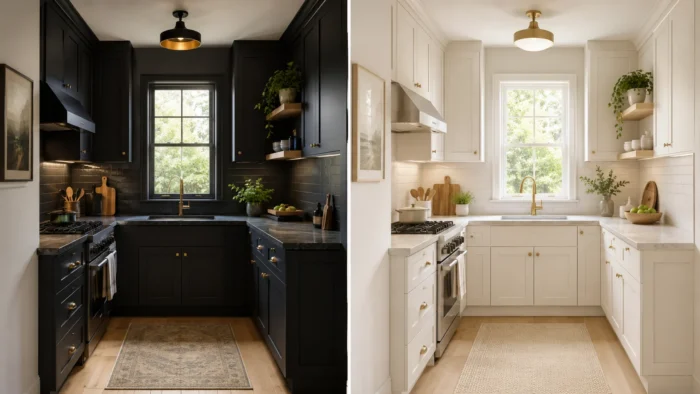
In compact kitchens, every design choice shapes how space is perceived. Dark, heavy colors absorb light and create a closed-in effect, making an already small room feel even tighter. Light, soft tones reflect natural and artificial light, blur visual boundaries, and create a seamless, airy look.
Beyond visual space, cabinet color impacts daily functionality and long-term value. The NKBA reports that 78% of real estate agents note light, neutral kitchen cabinets as a top selling point for small homes. The right color also hides dust, smudges, and minor wear better than bold or dark shades, keeping your kitchen looking tidy with less effort.
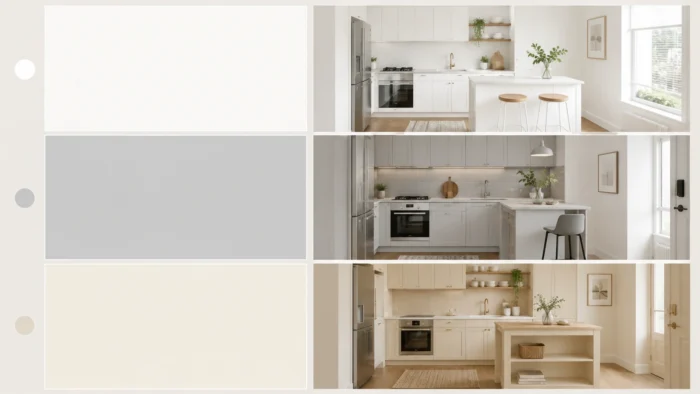
These evidence-based rules ensure your cabinet color enhances space, style, and practicality.
1. Prioritize Light, Reflective Tones
Light colors are the foundation of a spacious small kitchen. They bounce light across the room, eliminate dark corners, and create a continuous visual flow. Whether you prefer crisp, warm, or modern looks, starting with a light base guarantees a more open feel.
2. Stick to Low-Saturation, Muted Shades
Vibrant, highly saturated colors overwhelm small spaces. They draw excessive attention, create visual clutter, and disrupt the calm, expansive feel you want. Muted, soft tones feel elegant, timeless, and easy on the eyes, even in tight layouts.
3. Maintain a Cohesive, Low-Contrast Palette
High contrast between upper and lower cabinets breaks the room into sections, making it feel smaller. A cohesive palette—matching or gently complementary colors—creates unity. This simple trick makes walls and cabinets blend together, expanding the perceived space.
These curated colors are trusted by designers, backed by industry data, and tailored to make small kitchens shine.
Classic Fail-Safe Shades
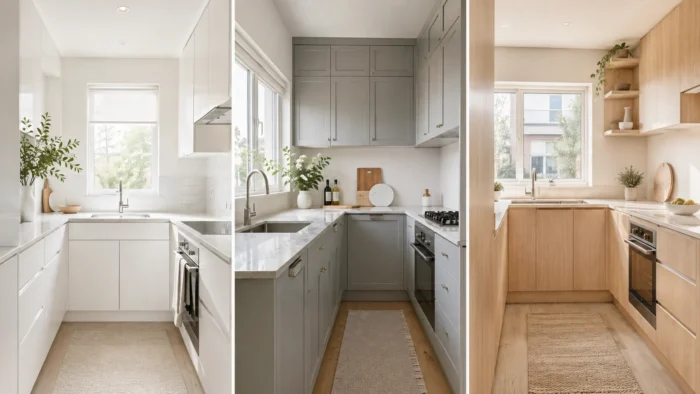
These timeless options work for every style and never go out of fashion.
- Bright White: The ultimate light-reflecting choice. It pairs with any countertop, floor, or accent and works in traditional, modern, and minimalist kitchens.
- Light Gray: A sleek, versatile neutral that hides stains better than white. It adds subtle sophistication without weighing down the space.
- Light Wood Tone: Soft, natural oak or maple finishes bring warmth while keeping the room open. They balance modern and cozy aesthetics perfectly.
Soft, Elevated Modern Tones
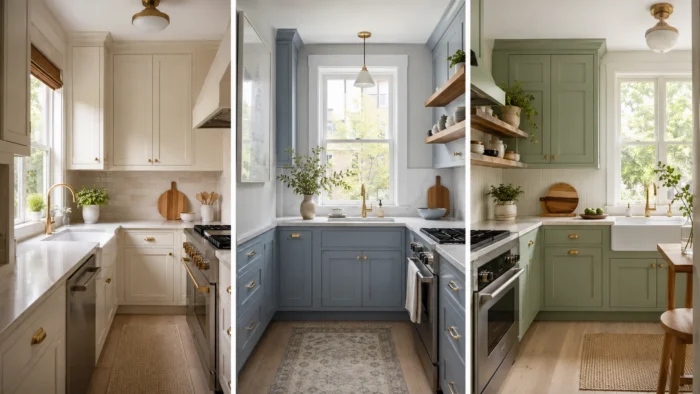
For personality without overwhelming space, these gentle hues are ideal.
- Cream / Off-White: Warmer than pure white, this shade creates a cozy, inviting kitchen and complements brass, gold, and black hardware.
- Dusty Blue / Pale Slate Blue: A calm, refined color that feels unexpected yet timeless. It adds depth while maintaining an airy vibe.
- Soft Sage Green: Fresh and tranquil, this earthy tone brings nature indoors and pairs beautifully with wood and marble surfaces.
Warm Minimalist Statement Colors
These subtle neutrals offer luxury and uniqueness without shrinking your kitchen.
- Taupe / Oatmeal: A soft blend of beige and gray that delivers quiet luxury. It works in both rustic and contemporary designs.
- Smoky Light Gray: A muted, modern shade that is sleek, easy to maintain, and highly compatible with bold accessories.
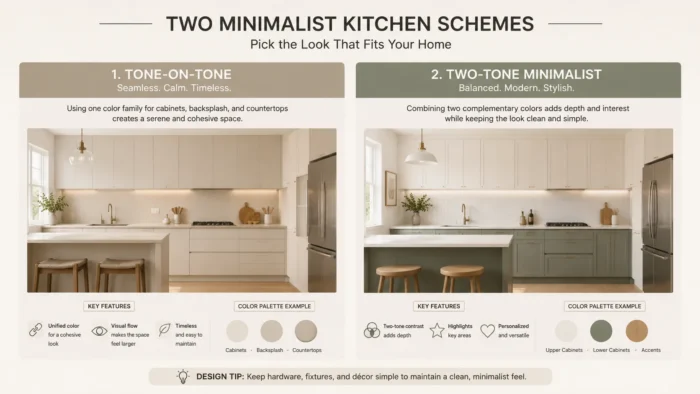
You don’t need complex designs to achieve a high-end look. These formulas deliver professional results.
1. Monochromatic Tonal Scheme
Use variations of one color for depth and harmony. For example: soft white upper cabinets with light gray lower cabinets. This approach adds dimension without breaking the visual flow.
2. Minimal Two-Tone Scheme
Pair light main cabinets with small, subtle accents. Try white cabinets with a light wood trim or a soft gray island. Keep contrast low to preserve the open feel.
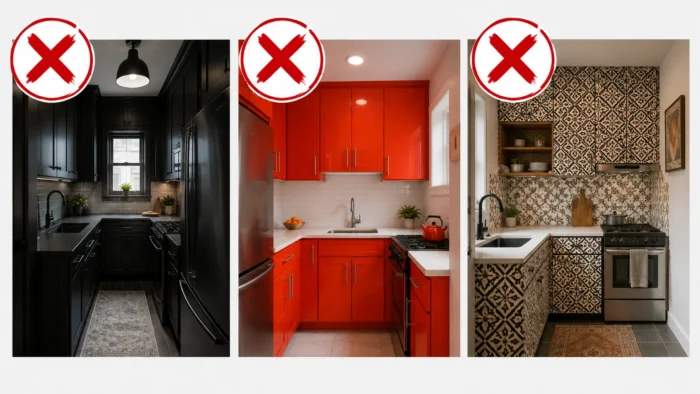
Some choices actively make small kitchens feel smaller. Steer clear of:
- Deep dark colors like solid black, dark brown, and heavy navy
- Highly saturated bright colors such as vivid red, neon yellow, and bold green
- Busy patterns, graphic prints, or multi-color patchwork designs
These elements create visual chaos, absorb light, and break the sense of space.
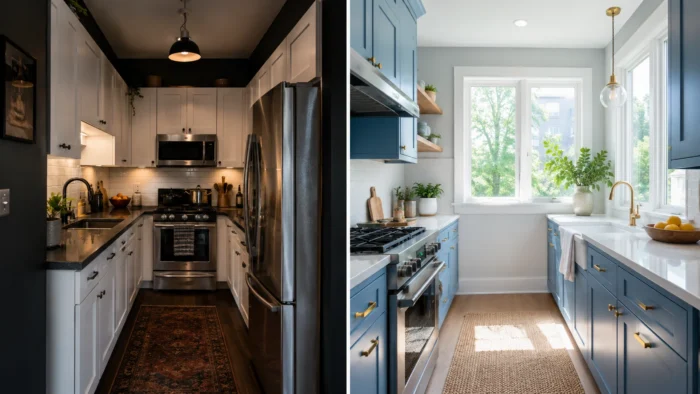
Lighting drastically changes how colors look. Tailor your choice to your kitchen’s natural light.
Low-Light or Dark Kitchens
Stick to bright white, cream, or pale gray. These shades maximize every bit of available light and prevent the room from feeling cave-like.
Well-Lit Kitchens
You can experiment softly with dusty blue, sage green, or taupe. These colors add character without sacrificing the sense of space.