A one wall kitchen (also called a single wall kitchen) looks simple on paper: everything lines up on one straight run—cabinets, countertop, sink, cooktop, and appliances. But in real life, this layout can feel surprisingly “designer” when it’s planned well… or painfully cramped when it’s not.
The good news? A one wall kitchen layout is one of the easiest layouts to optimize, because the rules are clear. Your job is to protect three things: a comfortable prep zone, strong storage, and a clean-looking front view (especially in open-plan homes). In this guide, I’ll walk you through practical one wall kitchen layout design ideas you can copy, plus cabinet choices that make the biggest difference—whether you’re designing a small apartment kitchen, a studio, or a modern open kitchen that faces the living room.
What is One Wall Kitchen Cabinet?
A one wall kitchen cabinet setup is a cabinet system designed for a one wall kitchen layout, where all the working zones—storage, sink, prep space, and cooking—are arranged along a single straight wall. Instead of wrapping around corners like an L-shaped kitchen or forming a U, this layout depends on one clean run of base cabinets and wall cabinets (or tall pantry units) to handle everything from daily storage to cooking flow.
In a well-planned one wall kitchen, the cabinets aren’t just “a row of boxes.” They’re built to create a practical sequence—usually fridge to sink to prep to cook—while maximizing storage through smart choices like deep drawers, tall pantry cabinets, appliance garage sections, and integrated organizers. Because you only get one main cabinet line, every centimeter matters. That’s why one wall kitchen cabinet design is often more focused on function, internal storage efficiency, and a clean front-facing look—especially in apartments, studios, and open-plan homes where the kitchen is always visible.
The 5 Decisions That Should Happen Before You Pick Cabinets
Most regret in single wall kitchen projects comes from skipping the planning stage and jumping straight to door styles and colors. Before you choose your kitchen cabinets, make these five decisions—because they’ll dictate what your cabinet system should look like.
1. How Long Is Your Usable Countertop Space?
The one wall kitchen layout lives or dies by continuous countertop space. If your sink and cooktop cut your run into tiny pieces, cooking becomes annoying fast. Try to protect one “main prep stretch” as your priority.
2. Can the Sink Be Moved, or Does It Have to Stay?
If you can’t move the sink, you can still upgrade storage with drawers and organizers. If you can move it, you unlock better prep flow—especially if you shift the sink closer to the fridge side and keep the middle for prep.
3. Are You a Light Cook or a Heavy Cook?
A light-cook home can lean into open shelving, cleaner visuals, and smaller appliances. A heavy-cook home should prioritize durable countertops, a serious hood, and an easy-to-clean backsplash that goes higher than you think.
4. How Much Storage Do You Really Need?
Be honest. If you stock up groceries, own big pots, or keep lots of small appliances, you’re not a “few shelves” person—you’re a tall cabinet and drawer-system person.
5. Do You Want the Kitchen to Feel Bigger or Feel More Luxurious?
This is a design identity question. “Feels bigger” often means brighter surfaces, fewer visual breaks, and less clutter. “Feels luxury” usually means stronger material contrast, better lighting layers, and more intentional details (like integrated appliances or a statement backsplash).
10 One Wall Kitchen Layout Design Ideas You Can Actually Use
Below are ten one wall kitchen layout design ideas that designers use all the time—because they solve real problems like storage, cramped countertops, and that “flat cabinet wall” look. Each idea includes cabinet guidance so you can translate inspiration into a buildable plan.
Group Tall Cabinets for Better Balance and Storage
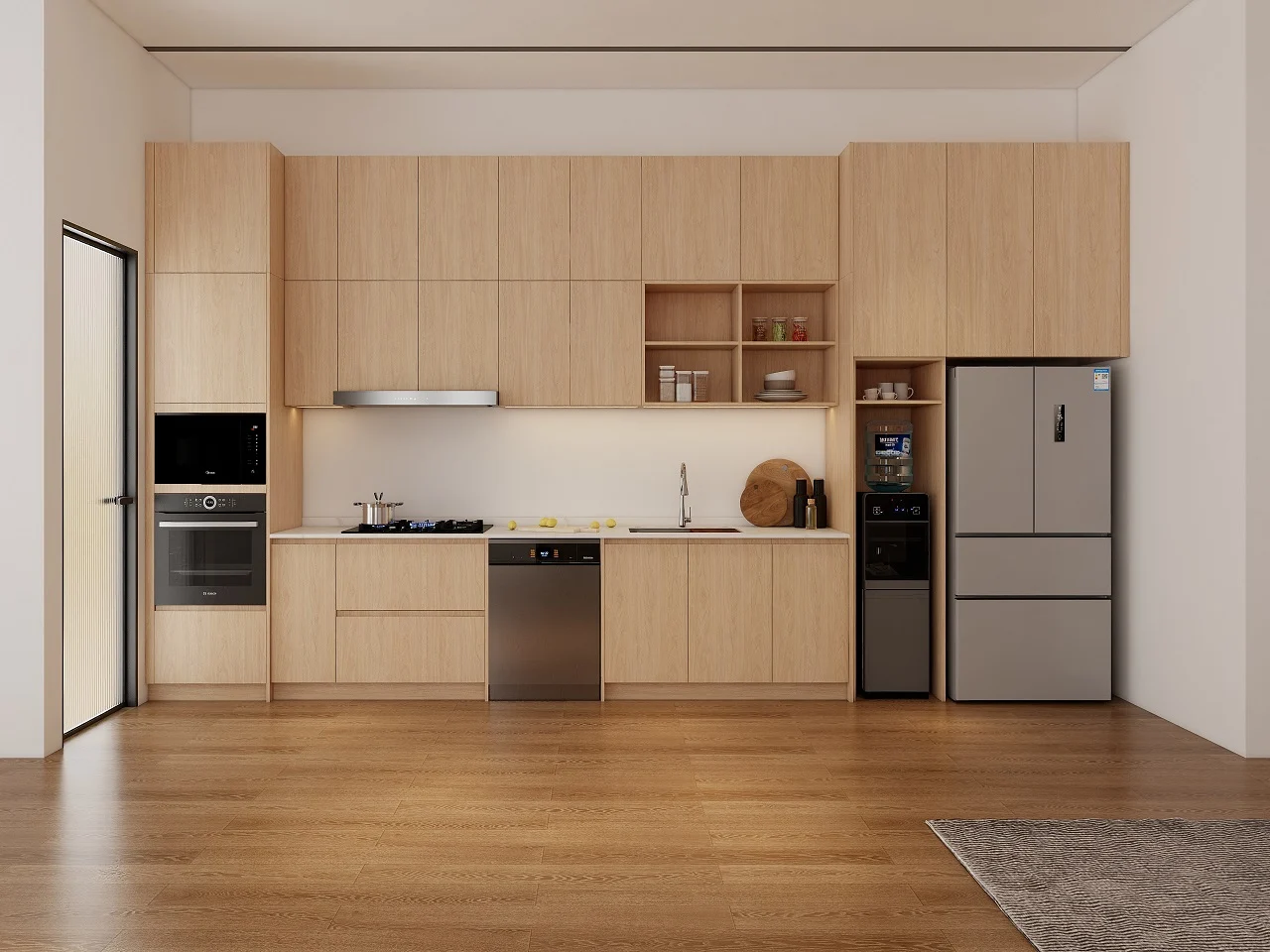
Instead of keeping everything the same height across the wall, group your tallest elements together—think fridge tall unit, pantry tall unit, and an oven tower if you have one. This creates a strong vertical “block,” then the rest of the kitchen can stay lower and lighter with continuous countertop space.
Visually, it makes a one wall kitchen feel designed rather than accidental. Functionally, it consolidates storage and appliances so the main counter run stays open for daily work. If your space is small, even one tall pantry can change the entire usability of the kitchen.
Use an Appliance Garage to Hide Small Appliances
One wall kitchens look messy fast because everything sits on the counter: toaster, coffee machine, kettle, air fryer. An appliance garage is basically a dedicated cabinet zone that hides those items behind a lift-up door or pocket door—so the kitchen looks calm even when you use it daily.
This is one of the most underrated one wall kitchen design ideas for open layouts. Your kitchen faces the living room, so visual clutter matters. Pair the appliance garage with a few internal outlets so you can keep things plugged in without cords ruining the look.
Deeper Base Cabinets for More Counter Space
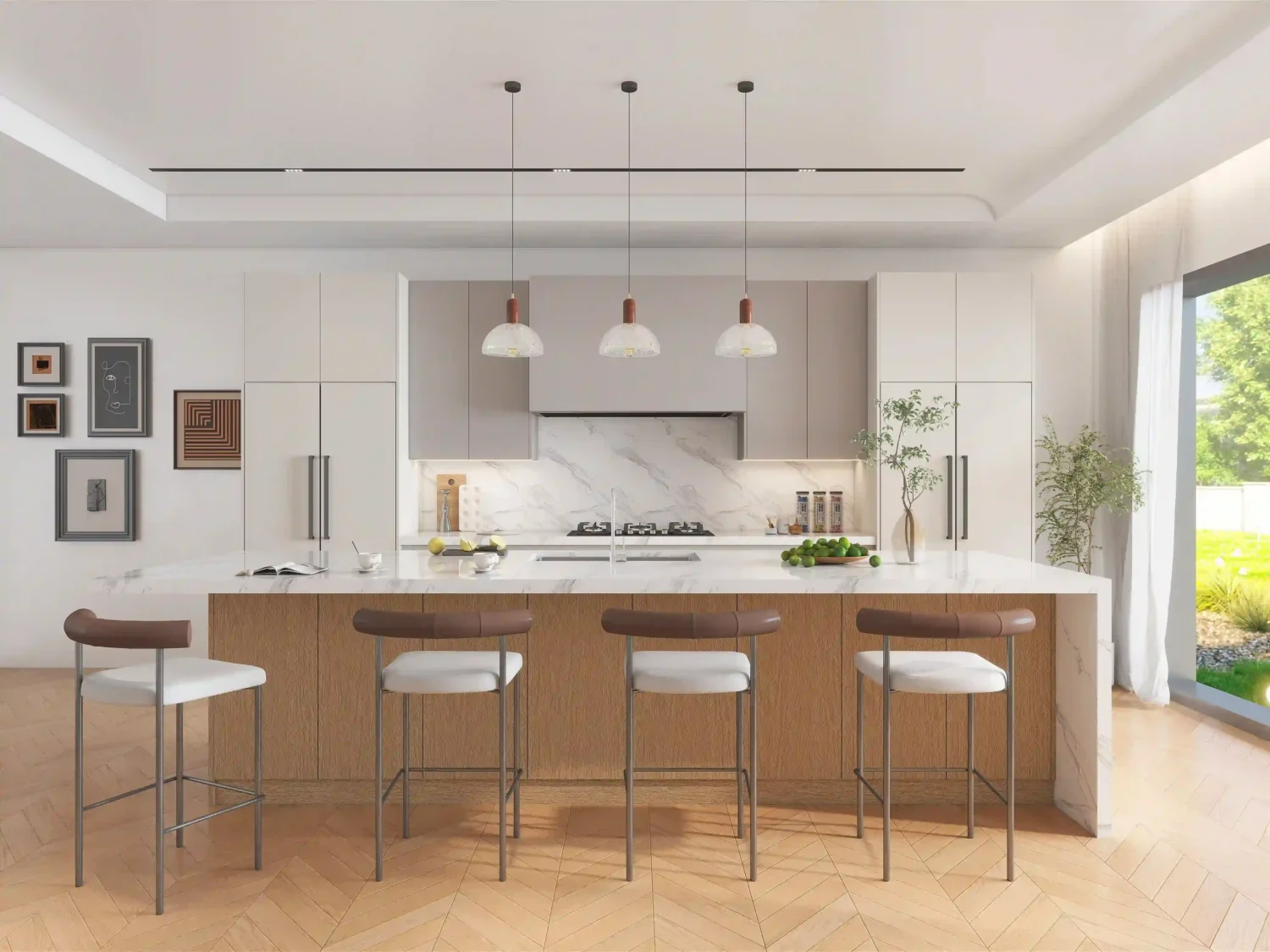
Standard base cabinets are often around 600mm deep (including doors), but in the right space, going a little deeper can be a game changer. A deeper counter gives you more usable prep area and better storage without expanding the layout outward with a second run.
This works especially well if you’re designing a one wall kitchen layout in a long open room where you have extra circulation space. Just don’t push depth so far that your walkway feels tight. The goal is comfort, not “bigger cabinets at all costs.”
Remove Upper Cabinets to Make the Space Feel Larger
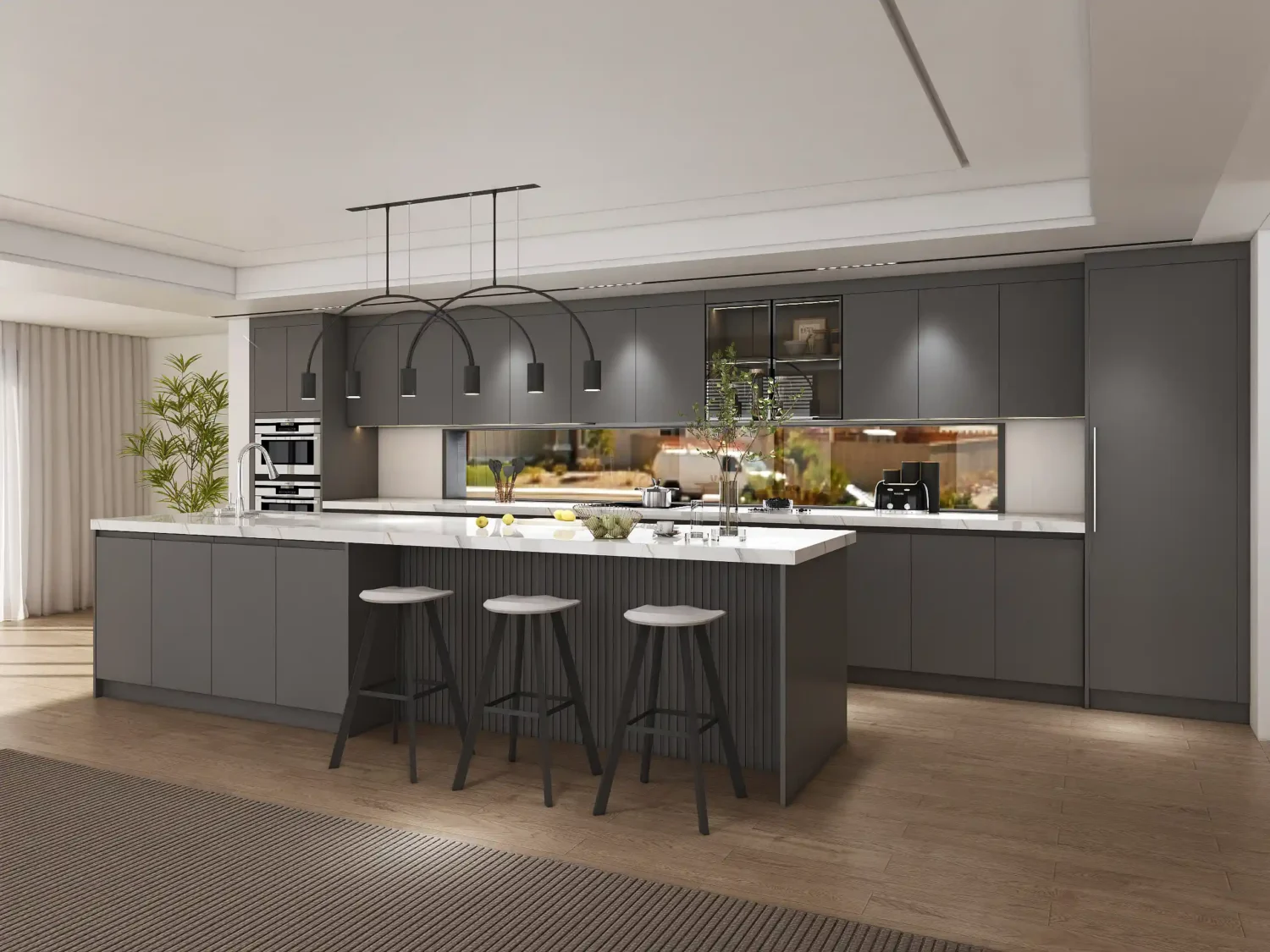
If your one wall kitchen looks heavy or cramped, a strategic no-upper-cabinet zone can instantly improve the vibe. Instead of upper cabinets across the whole wall, remove them over the prep area or sink area and use a full-height backsplash as your feature.
This is one of the cleanest modern one wall kitchen layout design ideas because it creates breathing room. You still need storage, so you’ll want stronger base cabinet organization and possibly a pantry unit. But the payoff is huge: the kitchen feels wider, taller, and more architectural.
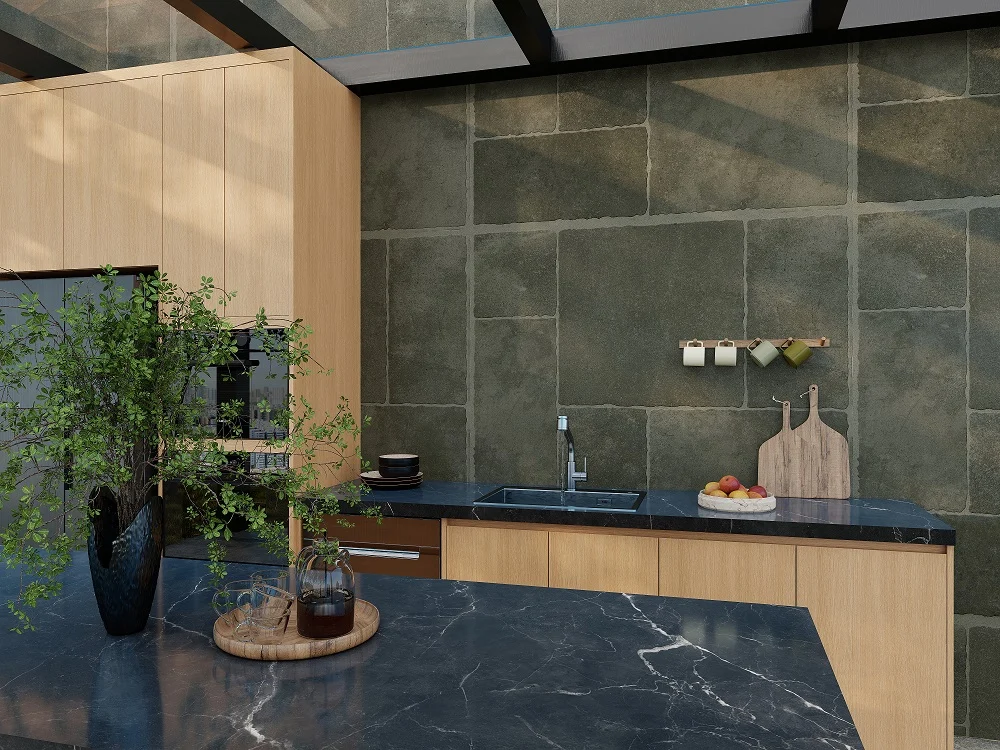
Extend the Counter for Seating
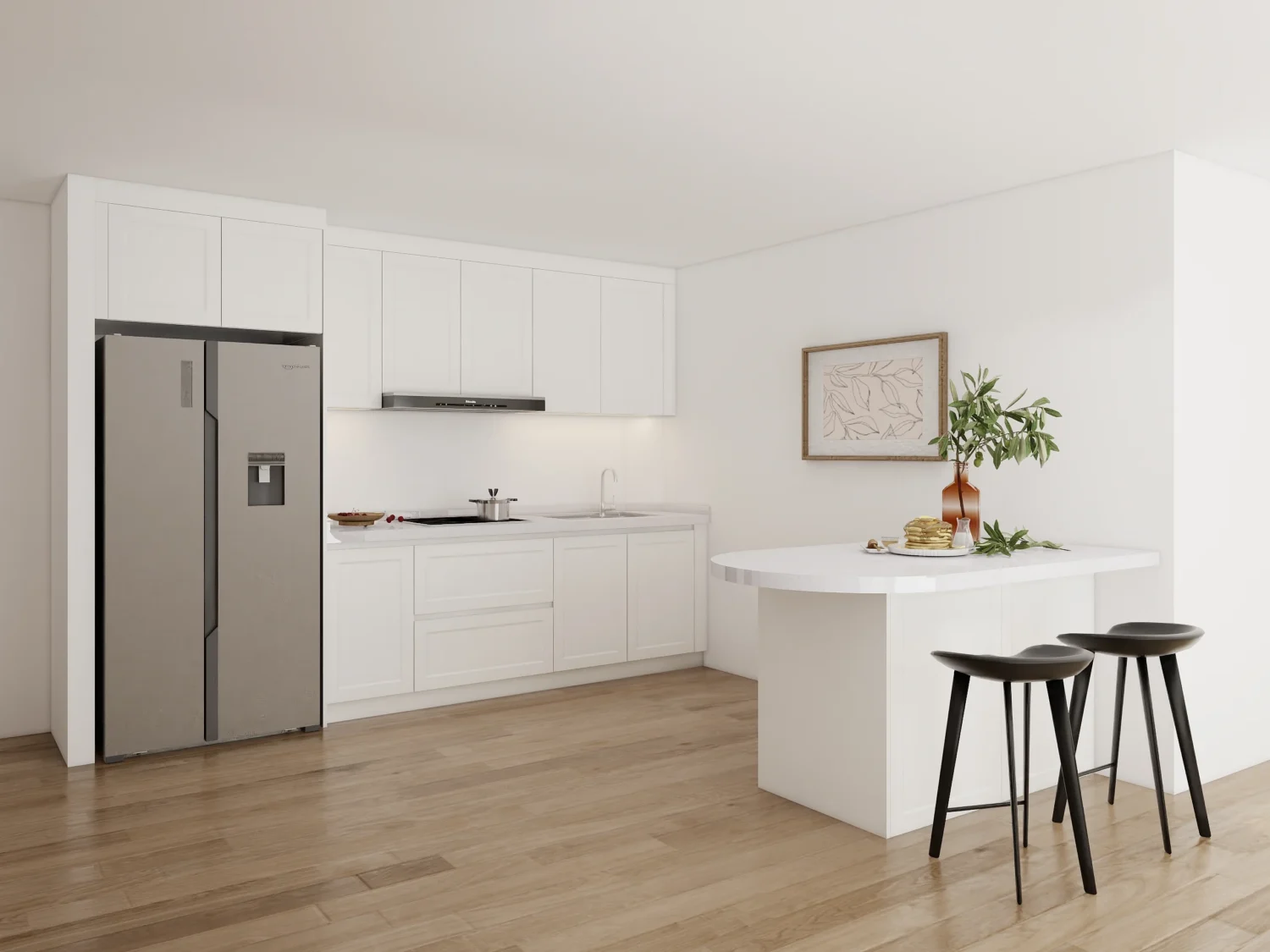
When a one wall kitchen feels short on workspace, the fastest fix is to extend the counter into a slim bar. You don’t need a full island. Even a modest overhang can become a coffee spot, a laptop perch, or an extra landing zone while cooking.
This idea is especially helpful for small home kitchens where the dining table competes with kitchen space. A bar extension can reduce furniture clutter and make the kitchen feel more integrated with the room. Just make sure your cabinet support and countertop thickness are planned correctly so it feels solid, not like an afterthought.
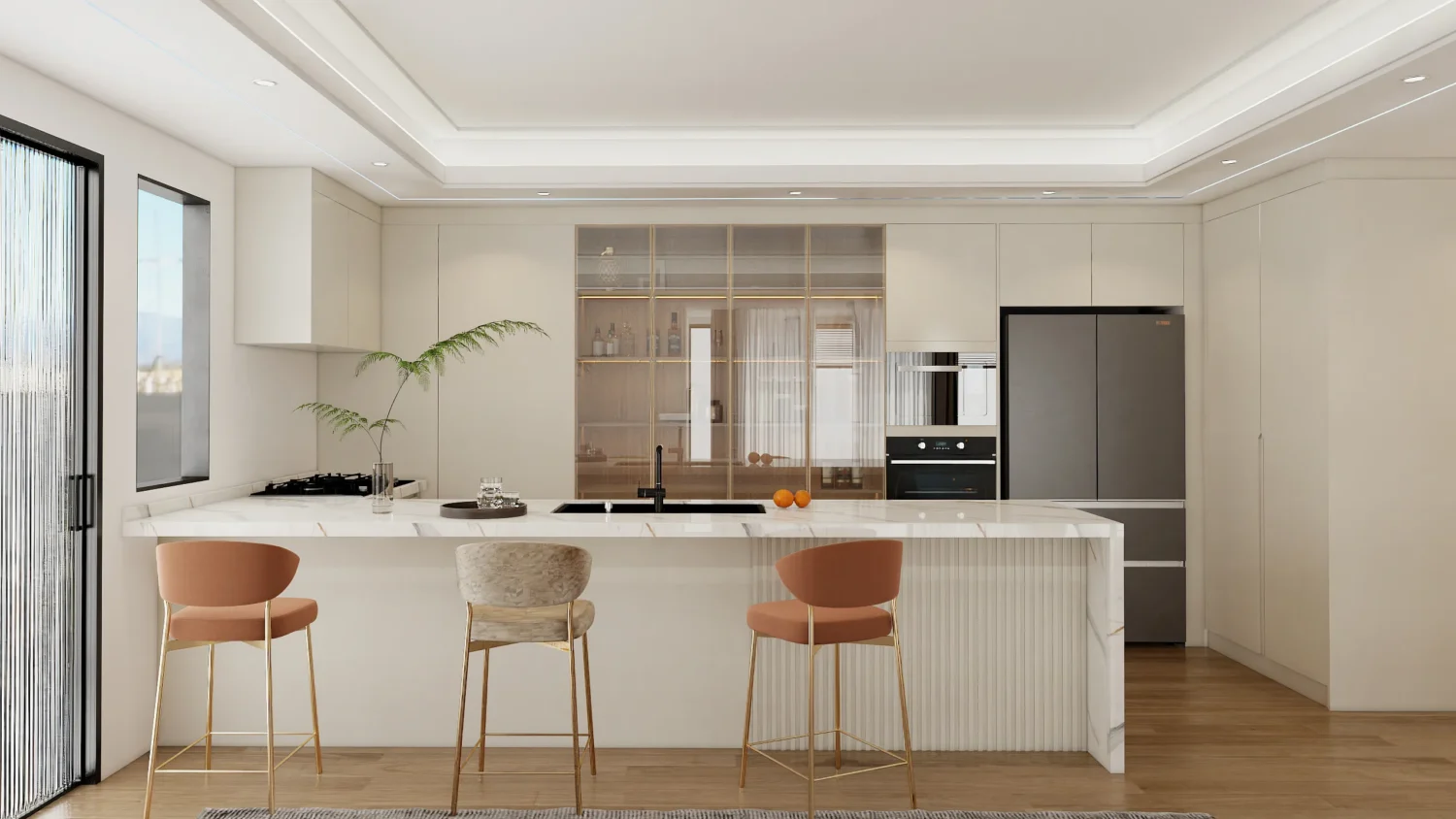
Create a Full-Height Cabinet Wall Look
One wall kitchens can look like… well, a kitchen stuck on a wall. If you want it to feel like part of the interior design, treat it like built-in furniture. That usually means tall panels, consistent door lines, and a cleaner appliance strategy (like panel-ready fridge or a tall cabinet that hides the fridge area).
This approach is perfect for modern apartments and hotel-style interiors. It also makes your material choice more important. A single wall kitchen with a consistent finish can look premium even without fancy details—because the lines read as intentional.
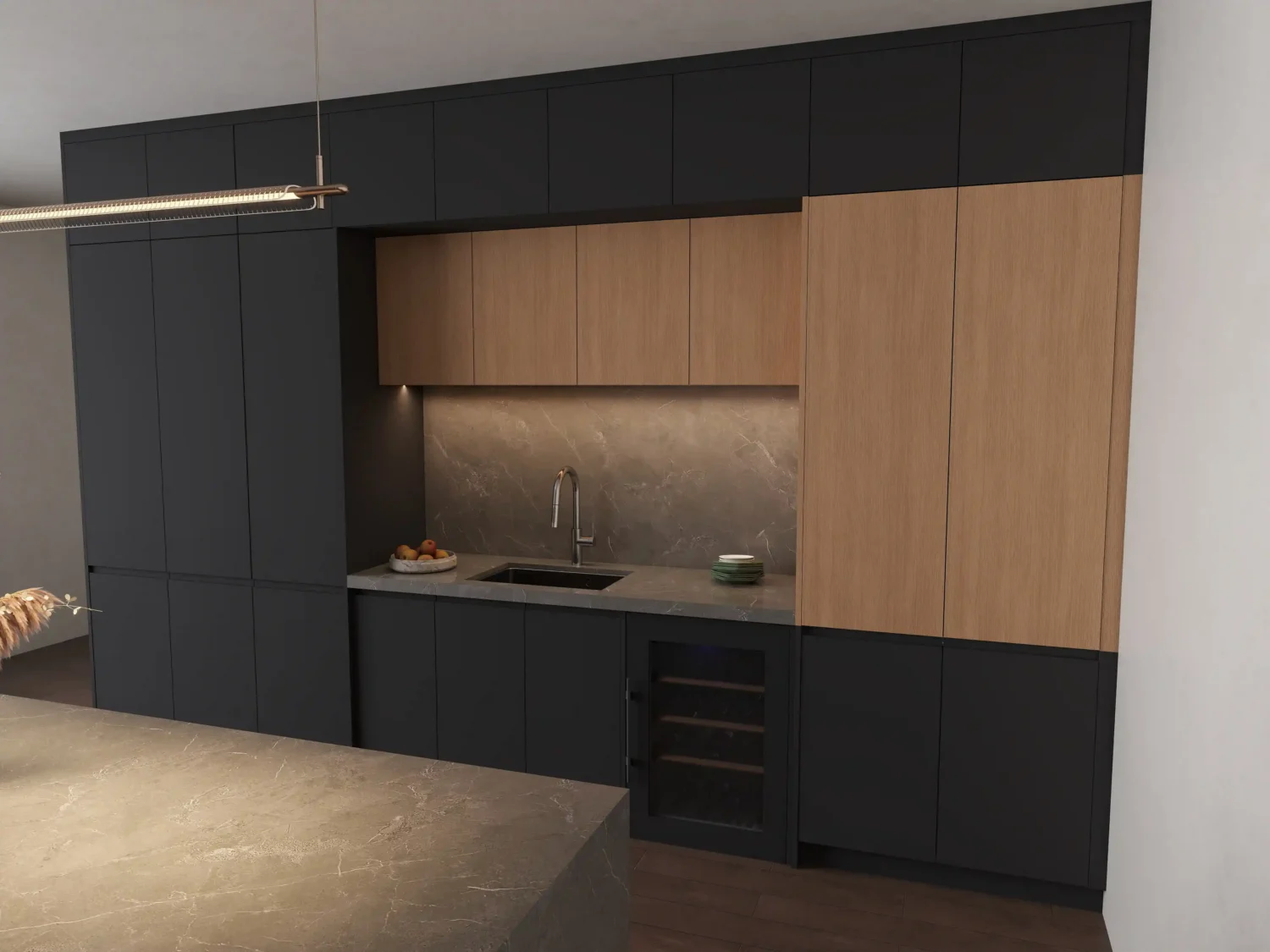
Move the Sink to One Side for Better Prep Space
Many people default to centering the sink, but in a one wall kitchen, that can chop up your countertop into small awkward pieces. A smarter move is often to shift the sink closer to the fridge side and keep the center of the run clear for prep.
This one change can make cooking feel dramatically easier. You’re basically creating a “prep runway” where you can chop, mix, plate, and set things down without fighting the sink edge or the cooktop. If you cook often, this is one of the highest-impact layout adjustments you can make.
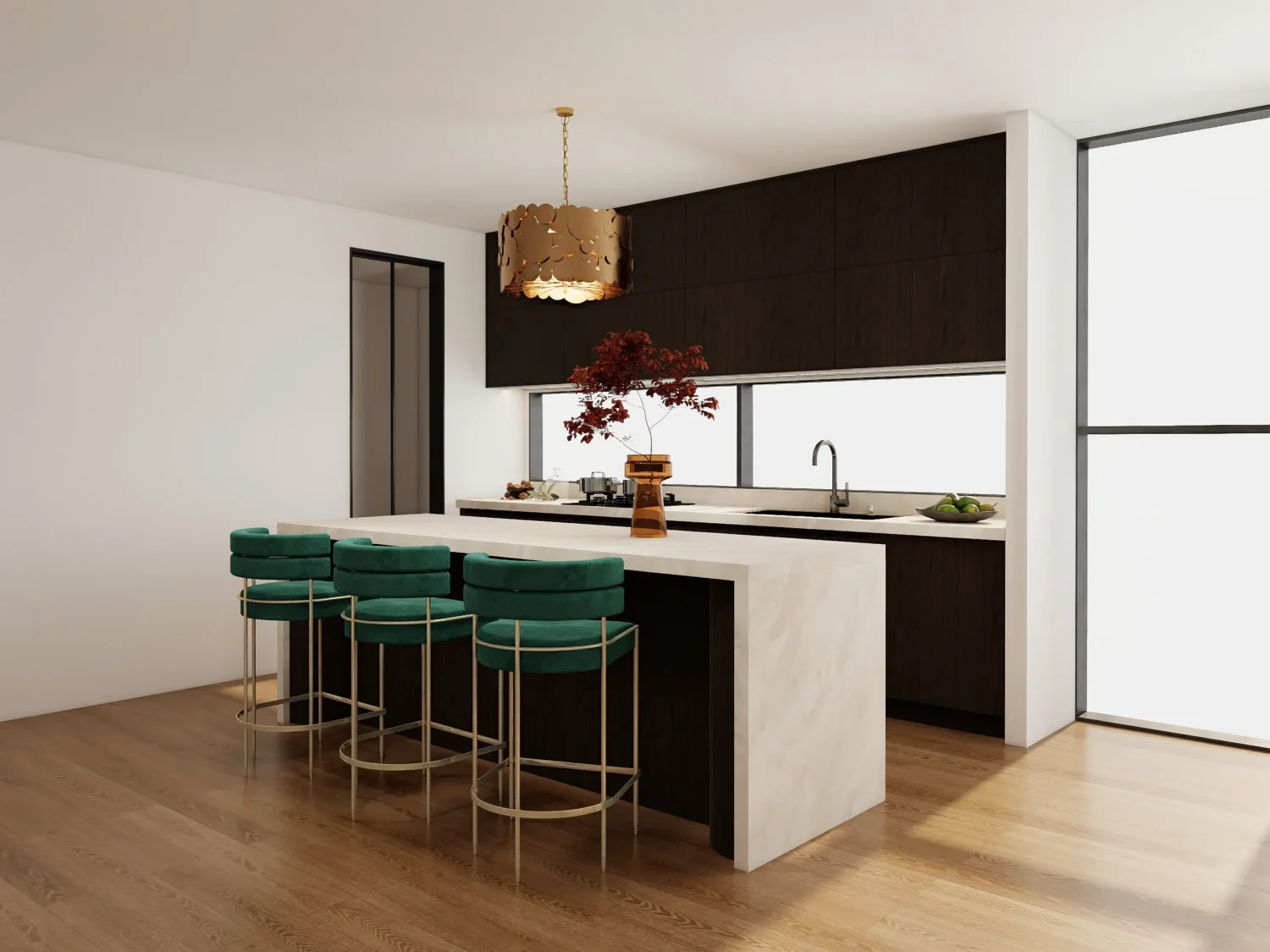
Combine Open Shelves with Closed Cabinets
Open shelves look great in photos, but they can make a single wall kitchen feel messy in real life. The trick is not to ban open shelving—it’s to limit it. Use shelves in one small section, style them with consistent dishes or glassware, and keep the rest of the storage closed.
In a one wall kitchen layout, closed cabinets keep the visual “line” clean. Open shelving should feel like a design accent, not your main storage strategy. If you’re designing a modern one wall kitchen, this balance keeps it looking curated instead of chaotic.
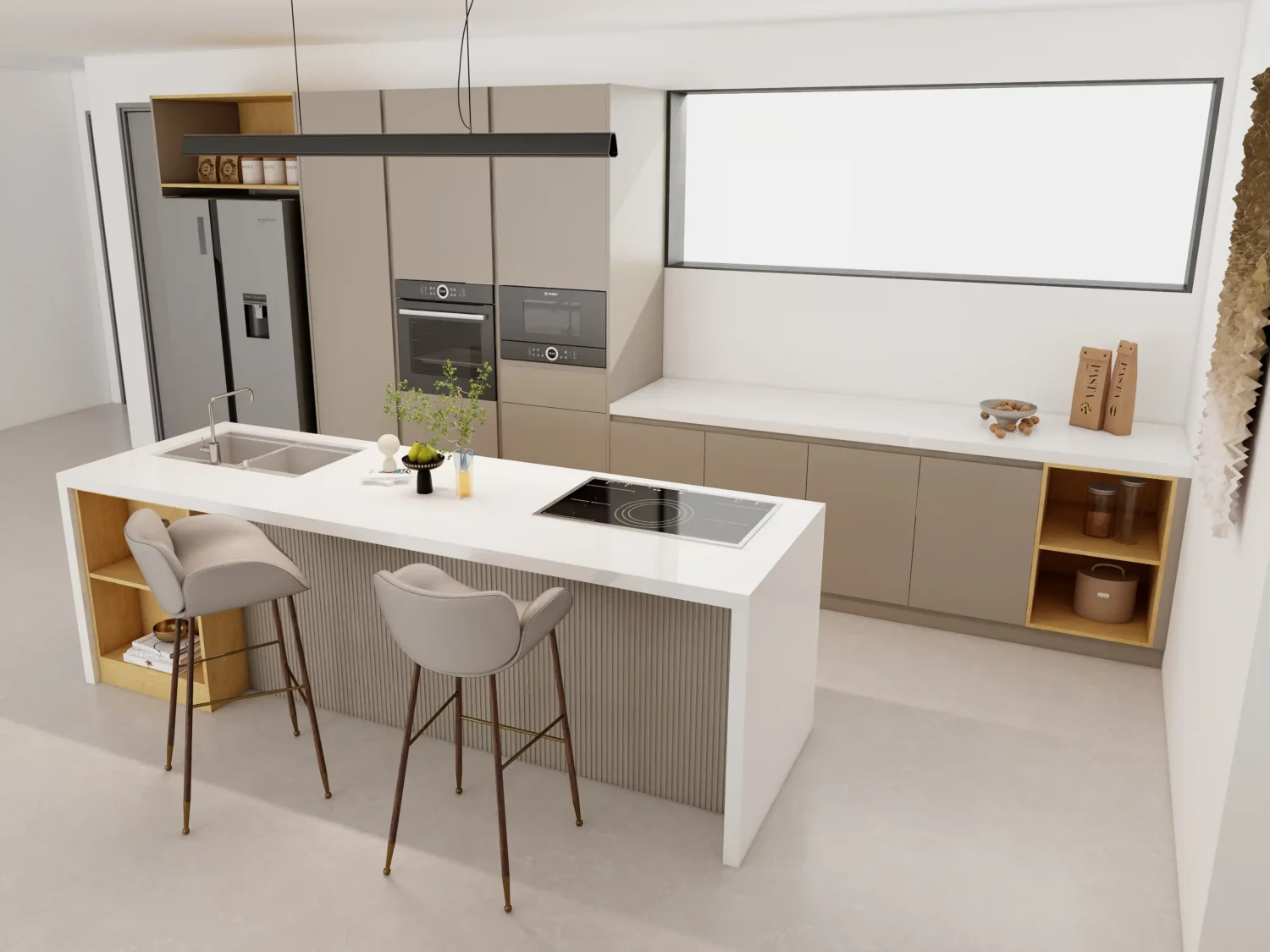
Use Drawers Instead of Shelves
If you’re choosing cabinetry for a single wall kitchen, drawers are your best friend. Deep drawers hold pots, pans, and pantry items more efficiently than shelves, and you don’t have to bend and dig. In small kitchens, the “easy to reach” factor isn’t a luxury—it’s daily sanity.
A drawer-first base cabinet layout also helps compensate for fewer upper cabinets. You can add internal organizers for spices, utensils, and cleaning supplies so everything has a home. When your storage is structured, your countertops stay clear—and that’s the real key to making a one wall kitchen feel bigger.
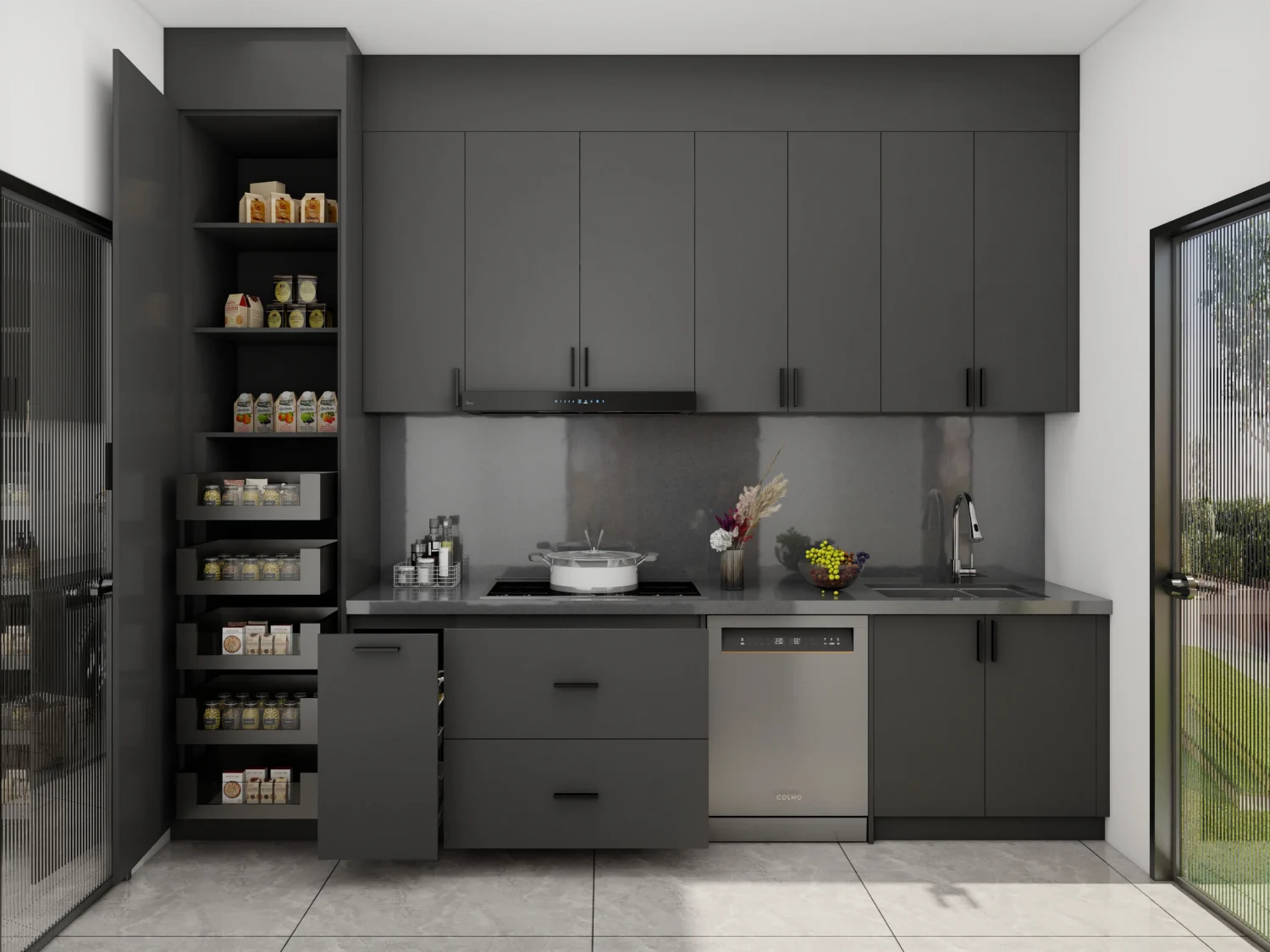
Add Layered Lighting for a Modern Look
Lighting is what turns a one wall kitchen from “basic” to “built.” If you only rely on a ceiling light, the wall can look flat. Add under-cabinet lighting to brighten the countertop, and consider a toe-kick glow (a soft light at the base) for a floating effect at night.
This is one of those one wall kitchen layout design ideas that feels small but changes everything. It improves function (you can actually see your prep area), and it builds visual depth. Keep your lighting color temperature consistent so it feels intentional and not patchy.
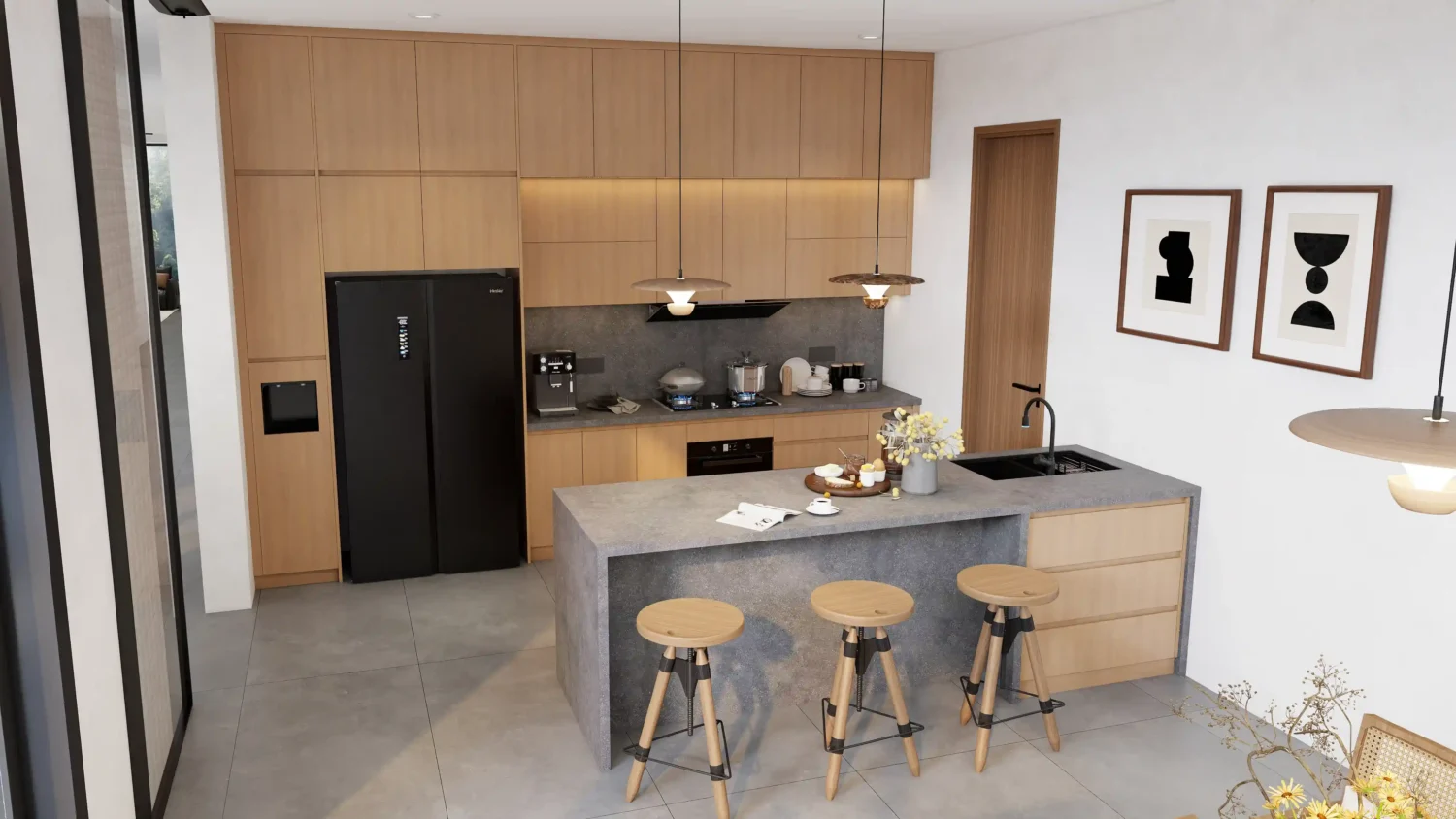
Final Thoughts
A one wall kitchen can be sleek, spacious-feeling, and surprisingly luxurious—if you protect the prep zone, build smart storage, and design the wall like a composed elevation (not a random lineup of boxes). The best one wall kitchen layout design ideas aren’t about trendy colors. They’re about workflow, cabinet function, and the details that keep your space calm every day.
If you’d like more personalized guidance, share a few basic details—your wall length, whether the sink location can be adjusted, and how often you cook. Our kitchen design teamsm can help you plan a practical one wall kitchen cabinet layout and provide a 3D kitchen design tailored to your space, lifestyle, and budget.
FAQs
Yes, a one wall kitchen layout is one of the best options for small spaces. It keeps all cabinets and appliances on a single wall, which saves floor space and improves movement. With proper cabinet storage and lighting, it can still be very functional and stylish.
Ideally, a one wall kitchen should be at least 8 to 10 feet long to allow enough space for the sink, cooktop, and a usable prep area. Shorter layouts can still work, but smart cabinet planning and drawer storage become more important.
Yes, you can add a small island or a slim counter extension to a one wall kitchen if space allows. This provides extra prep space, storage, or seating without changing the main kitchen layout. Many homes use this as an alternative to a full island.
Drawers work better than shelves for base cabinets in a one wall kitchen. Tall pantry cabinets also help maximize vertical storage. Choosing cabinets with built-in organizers keeps the kitchen functional without cluttering the countertop.
To make a one wall kitchen look bigger, use light-colored cabinets, limit upper cabinets in key areas, and add under-cabinet lighting. Keeping countertops clear and using a simple, continuous cabinet design also helps create a more open feel.