Choosing the right cabinetry is one of the most critical decisions in any kitchen remodeling or construction project. As the anchor of kitchen aesthetics and storage functionality, your cabinet doors set the visual tone for the entire home.
In 2026, kitchen cabinet design is evolving toward warm minimalism, functional versatility, and natural textures. Understanding the top kitchen cabinet styles for 2026—specifically Shaker, Slab, and Transitional designs—will help you make an informed investment that blends contemporary appeal with long-term value.
Why Are Kitchen Cabinet Styles Changing in 2026?
Kitchen design trends in 2026 reflect a broader shift in how families use their living spaces. Homeowners are moving away from sterile, stark-white kitchens and rigid minimalist spaces in favor of warmer, more tactile environments.
The Resurgence of Warmth & Natural Wood: Natural wood finishes—such as white oak, walnut, and warm neutral stains—have officially surpassed stark white as top cabinet choices.
Seamless Integration: With open-concept layouts remaining a standard, kitchen cabinets must visually blend with surrounding dining and living room furniture.
Ergonomics & Practical Maintenance: Storage efficiency, soft-close mechanisms, and easy-to-clean door profiles are prioritized over heavy ornamentation.
Shaker Cabinets: A Timeless Choice for Modern Kitchens
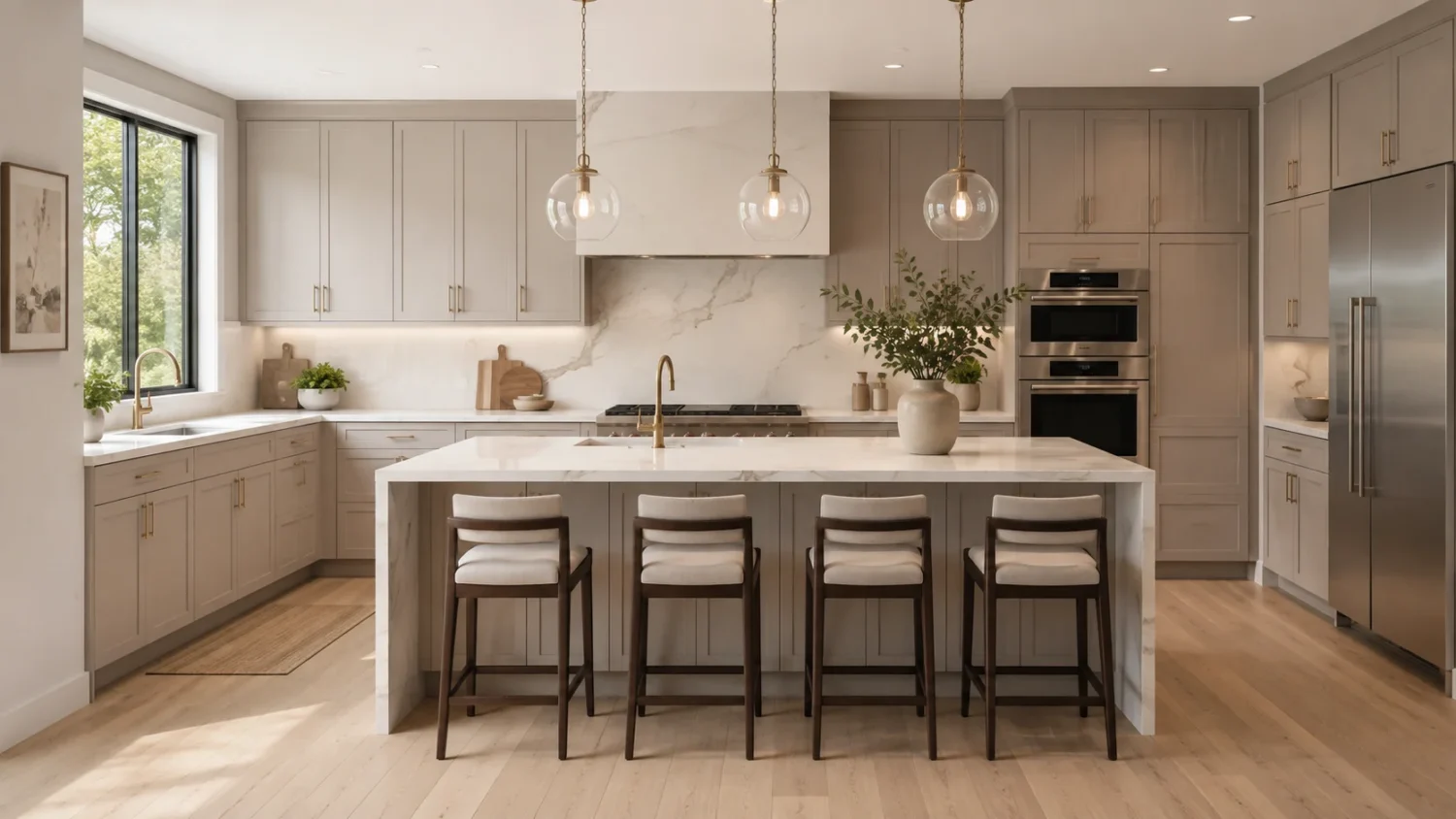
Shaker cabinets feature a iconic five-piece door structure—consisting of a flat recessed center panel framed by four pieces. Originating from 18th-century Shaker craftsmanship focused on utility and clean lines, this style accounts for over half of modern residential installations.
The 2026 Evolution: Slim Shaker Profiles
While classic Shaker doors remain popular, 2026 has introduced the Slim Shaker (Micro-Shaker) profile. By narrowing the outer framing from the traditional 2.5 inches down to 1 inch, Slim Shaker cabinets create a lighter, sleeker border while retaining architectural depth.
Best Suited For: Modern Farmhouse, Updated Traditional, and Contemporary Organic kitchens.
Key Advantages: Unmatched versatility, high resale value, and seamless pairability with hardware finishes ranging from brushed brass to matte black.
Slab Cabinets: The Rise of Minimalist Kitchen Design

Slab cabinets (also called flat-panel cabinets) feature a single, completely flat door face with no recessed panels, frames, or grooves. This style serves as the centerpiece of modern, Scandinavian, and European-inspired kitchen design.
| Feature | Slab / Flat-Panel Cabinets |
|---|---|
| Visual Style | Sleek, continuous, and ultra-modern |
| Maintenance | Extremely easy to clean (no grooves or dust-collecting ridges) |
| Material Finishes | Natural wood veneer, matte lacquer, PET, or high-density laminate |
| Hardware Pairing | Integrated J-pulls, push-to-open latches, or slender edge pulls |
Why Slab Cabinets Excel in 2026
Slab doors maximize visual continuity. When paired with hidden appliance panels or handleless push-to-open hardware, they create uninterrupted runs of cabinetry. In 2026, matte textures and vertical natural wood grains (such as quarter-sawn white oak) dominate slab cabinetry, adding tactile warmth to minimalist layouts.
Transitional Cabinets: Where Classic Meets Contemporary

Transitional cabinet designs bridge the gap between traditional craftsmanship and sleek modern aesthetics. If you find classic raised-panel doors too decorative and ultra-minimalist slab doors too cold, transitional styles offer the ideal balance.
Defining Characteristics of Transitional Cabinetry
Subtle Profiling: Features narrow bevels, soft interior chamfers, or light step-down moldings inside a traditional frame.
Mixed Material Palette: Combines painted perimeter cabinets (e.g., taupe, sage green, or greige) with a stained natural wood island.
Flexible Hardware Integration: Easily pairs with classic cup pulls, modern bar pulls, or decorative knobs.
Transitional cabinetry allows homeowners to mix warm organic textures with clean contemporary lines, creating a custom kitchen that feels both curated and timeless.
How to Choose the Right Kitchen Cabinet Style for Your Home?
Selecting the optimal cabinet style depends on your architectural layout, lifestyle, and project scope. Consider the following key criteria before placing your order:
1. Match Your Architectural Style
Modern / High-Rise Apartments: Opt for Slab cabinets with handleless hardware or slim edge pulls to emphasize clean horizontal lines.
Suburban / Single-Family Homes: Slim Shaker or Transitional doors provide long-lasting flexibility that adapts to evolving interior trends.
2. Evaluate Maintenance Needs
Busy households with children or pets may prefer Slab doors or flat-panel Shaker designs in durable, stain-resistant finishes like PET or thermofoil, which wipe clean in seconds without catching dust in recessed corners.
3. Consider B2B & Project Efficiency (For Builders & Designers)
For commercial developments or multi-family housing projects, shipping logistics and assembly play a massive role:
RTA (Ready-To-Assemble) Flat-Pack Cabinets: Reduce ocean freight volume and shipping costs for large-scale imports.
Pre-Assembled Cabinetry: Saves expensive job-site labor hours during commercial installation.
Final Takeaway
Whether you choose the versatile framework of Shaker, the streamlined simplicity of Slab, or the flexible elegance of Transitional designs, selecting high-quality cabinet construction ensures your kitchen remains stylish and durable for years to come.
Ready to Upgrade Your Kitchen Cabinetry?
From classic Shaker craftsmanship to minimalist European Slab profiles, PA Home offers complete custom cabinetry solutions tailored to your floor plan and architectural style. Backed by 17 years of international project expertise and state-of-the-art automated production, we turn high-end kitchen concepts into reality.
📩 [Send Us Your Floor Plan for a Free Quote]
FAQs
1. What is the most popular kitchen cabinet style for 2026?
Shaker cabinets continue to lead the industry, but the Slim Shaker (Micro-Shaker) profile has become the most popular variation for 2026. It combines the warm structural look of traditional framing with thinner 1-inch borders for a cleaner, modern aesthetic.
2. Are Slab (flat-panel) cabinets more expensive than Shaker cabinets?
Not necessarily. In standard laminates or thermofoil, Slab cabinets are often less expensive to produce because they require fewer door panels to construct. However, high-end Slab cabinets featuring natural wood veneers, matte lacquers, or continuous vertical grain matching can command a premium price.
3. What is the difference between classic Shaker and Slim Shaker cabinets?
Traditional Shaker doors feature outer framing that is typically 2.25 to 2.5 inches wide with a deep recessed center panel. Slim Shaker cabinets narrow that outer frame down to 0.75 to 1 inch, creating a lighter, more streamlined frame that works seamlessly in modern organic and transitional kitchens.
4. Why are Transitional cabinets recommended for home resale value?
Transitional cabinets combine elements from both classic (Shaker) and contemporary (Slab) styles. Because they avoid extreme trends—neither too decorative nor ultra-minimalist—they appeal to the widest pool of prospective home buyers, helping protect your renovation investment over time.